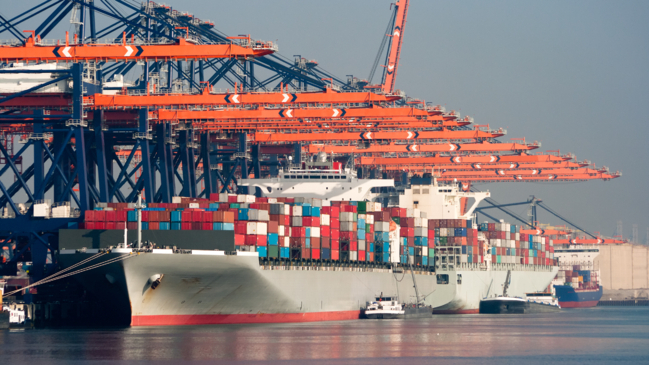
A sustainability project led by the port of Rotterdam will receive 25 million euros in European funding. The money will be used to carry out ten pilots, which should provide insight into which types of green energy are suitable for which types of means of transport.
The grant will go to MAGPIE, an international partnership of 45 companies, knowledge institutions and ports led by the Port of Rotterdam Authority. They are working on tests with sustainable fuels and energy carriers, such as green hydrogen, large electric batteries and bio-LNG. "They all have their plus points and challenges," writes the Port of Rotterdam Authority. "Some seem more suitable for shipping, others for application in the port itself or for transport to destinations inland. Some parts of the chain from production to use have already been tested, others not yet."
Locomotive with battery
The research programme focuses mainly on fuels and energy carriers that have not yet been tested in practice in certain aspects. An exampleis the use of an electric locomotive with a battery that can be recharged with power from the overhead line, so that it can run in places where there are no overhead lines.
CO2-free in 2050
Projects will also be set up in the field of digitalisation and automation, in order to make logistics smarter and more sustainable. The aim is to make transport in ports CO2-free by 2050, for which major steps must already be taken in 2030 and 2040. MAGPIE wants to set out what is needed to achieve this.
The five-year project also involves port companies from Germany, France and Portugal. Incidentally, the grant is not yet final, reports the Port of Rotterdam. A formal 'grant agreement' still needs to be concluded with the European Union in the coming months.