 Pexels
Since the Environment Act came into force on 1 January 2024, the rules governing waste water and environmental impact from business activities have changed significantly. For transport companies and logistics service providers with their own vehicle fleets, this has direct implications for the way in which vehicles are cleaned. Now that the Act has been in force for over two years, it is becoming increasingly clear what adjustments are needed in practice.
The Environment Act brings together 26 previous laws, including the Environmental Management Act and the Spatial Planning Act, into a single coherent framework. Local authorities set local rules through environmental plans, including for activities such as washing vehicles on business premises. This means that requirements can vary considerably from one location to another, something for which many logistics companies are still insufficiently prepared.
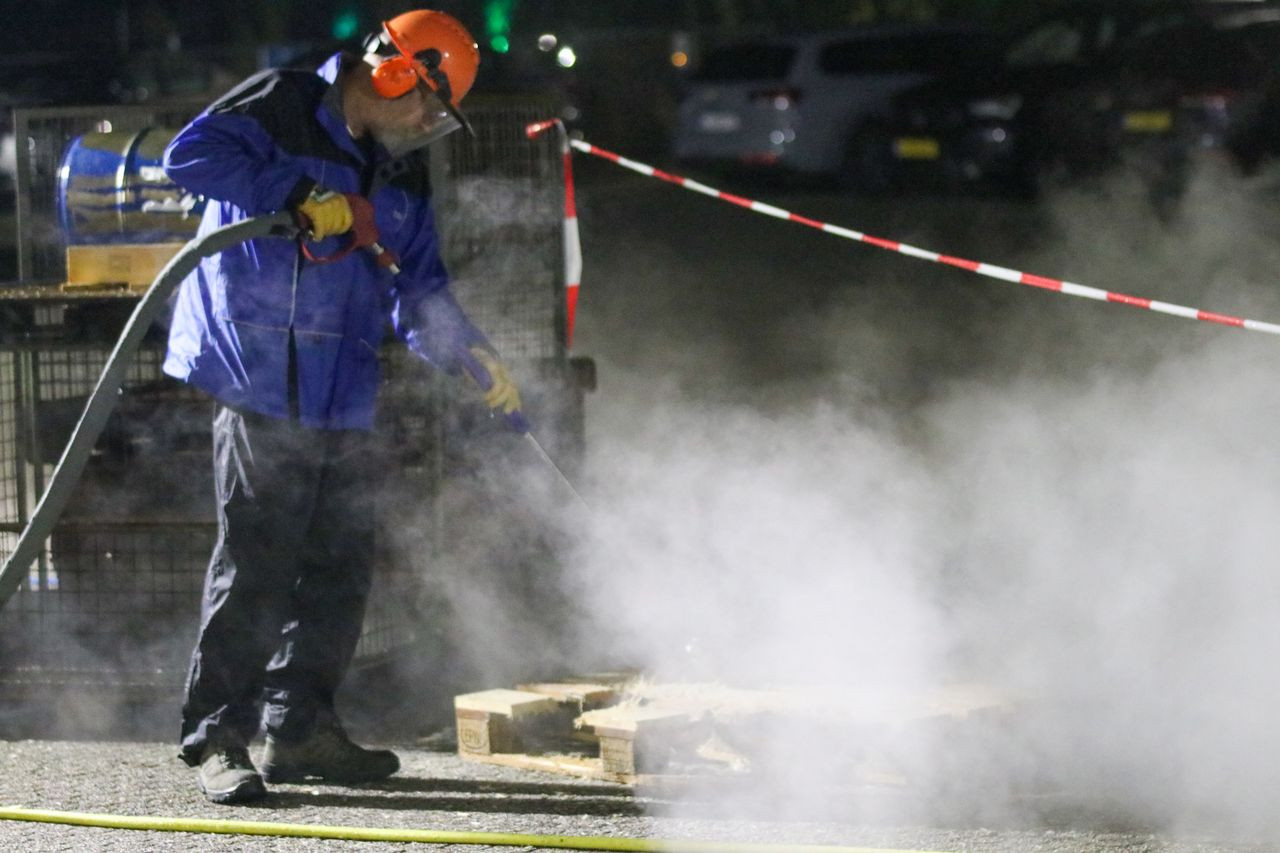
The impact affects not only the wash bay itself, but also the choice of cleaning equipment. Professional high-pressure washers for cleaning companies must comply with stricter regulations on water and chemical consumption. Those who invest in equipment that uses less water and cleans more efficiently will generally meet local discharge standards more quickly.
What specific changes will this bring for car washes on logistics sites?
Under the Living Environment Activities Decree, which forms part of the new legal framework, specific rules apply to the washing of motor vehicles. Wastewater must not be discharged untreated into the sewer system or surface water. Businesses must be able to demonstrate that they have an adequate oil and grease separator or an equivalent treatment system.
For logistics companies that wash their fleets on their own premises, this may mean that existing washing facilities need to be adapted. The Environmental Information Centre provides guidelines for interpreting these rules, but local authorities are increasingly applying bespoke regulations. As a result, a haulier in the Randstad may face different requirements to a colleague in the eastern Netherlands.
In practice, this means that hauliers are increasingly considering external washing facilities or investing in closed-loop water systems on their own premises. Both approaches entail costs that must be carefully factored into their operational budgets.
Water consumption is becoming an increasingly significant operational cost
Cleaning a lorry or trailer requires considerable amounts of water. With increasing pressure on water supplies during dry summers, water consumption is no longer just an environmental issue, but also a direct financial concern. Logistics companies that wash dozens of vehicles every day are seeing this reflected immediately in their operating costs.
Modern high-pressure equipment with water recycling can significantly reduce water consumption. Specialists in cleaning technology, such as Herveld-based Altecparts.nl, are seeing growing demand for systems that use less water without compromising on cleaning power. The right combination of high-pressure pump, nozzle and water collection system determines how efficiently such a system performs in practice.
The return on such investments depends heavily on the scale of operations. For a company with five delivery vans, the business case is fundamentally different from that of a haulage contractor that cleans a hundred tractor units and semi-trailers every day.
Mobile cleaning is gaining ground as an alternative to fixed car washes
A notable shift in the sector is the growth of mobile cleaning services. Instead of driving vehicles to a fixed car wash, specialist cleaning companies bring mobile high-pressure units to the logistics hub. This not only saves driving time but can also help to meet local discharge requirements when the mobile unit has its own water collection and treatment system.
This trend is in line with the wider shift within the logistics sector towards a more flexible organisation of support processes. Cleaning equipment that delivers high-pressure performance whilst remaining compact and portable fits in with this development. For high-pressure cleaners used at varying locations, robustness is at least as important as cleaning power.
However, there are some caveats. Not every type of contamination can be removed using mobile equipment, and certified washing facilities remain essential for the thorough cleaning of tankers or food transport vehicles. The choice between mobile and stationary solutions depends on the type of cargo and the associated hygiene standards.
Thinking ahead pays off when investing in cleaning infrastructure
The sector expects discharge requirements to be further tightened in the coming years, in line with the European Green Deal and water quality targets. Logistics companies would be wise to take stricter standards than the current ones into account when investing in cleaning infrastructure.
Those who opt now for equipment with a modular design that can easily be expanded to include water recycling or filtration systems will avoid duplicate investments in the long run. The central government publishes up-to-date information on regulatory changes. It pays to actively monitor these developments rather than wait until enforcement measures are introduced.
More information