Which trends and developments in the logistics property market should we take into account in the coming period? According to investor PATRIZIA Logistics, these are three developments that are inextricably linked and strongly influence the entire logistics chain: changing consumer behaviour, urbanisation and sustainability. "Buying behaviour is changing and that affects how the entire supply chain is organised," says Managing Director Roger Peters in an interview with LogistiekProfs.
Changing consumer behaviour
That changing consumer behaviour underlies supply chain reconfiguration needs almost no explanation. Convenience, price and speed are the pillars that consumers nowadays mainly pay attention to when buying a product. "So to meet that speed to market, you see retail and logistics increasingly becoming more intertwined than before," Peters explains. The retailer increasingly expects the logistics provider to ensure that its logistics solution is close to the end customer in terms of building, efficiency and delivery speed. "As a result, you increasingly see an integration of suburban larger logistics buildings and urbane small technology-enabled buildings, resulting in certain forms of urban logistics. For example, Amazon in Germany has rented a smaller logistics centre in a car park on the Kurfurstendam as part of its urban fulfilment strategy. So logistics is now becoming very tangible, which is a direct consequence of our buying behaviour."
Urbanisation
Peters sees a dual logistics need emerging of XL distribution centres in suburban locations on the one hand and smaller DCs or cross docks in metropolitan locations on the other. "Companies like Amazon, Asos, Jago and Zalando have or will have giant distribution centres in several major European countries. Michael Kors in Venlo is another good example. Due to the need to be close to consumers and deliver quickly, they are also opening smaller distribution centres near large urban areas: the so-called hub and spoke strategy. This is a good move strategically, as the growth in many European cities is relatively high: the number of inhabitants within the city limits thus grows between 25 thousand and 150 thousand people per year." According to Peters, the demand for urban and relatively smaller distribution centres will lead to more intensive land use, though. "Spatial densification is definitely going to cause multi-storey construction in the major European metropolises, because that is where the pressure for intensive and efficient land use is greatest. The internal movement of picking and packing, distribution and handling will then be done via electronic lift, paternoster or via conveyor belt systems. Cities like London, Berlin and Munich are already experimenting with this. It is only a matter of time before we go up here like Tokyo, Hong Kong and Singapore." Peters believes that the technologies for this are already available, but that the regulations are not designed for this. The logistics implementation of 3PLs would also still lag behind in terms of vehicles and internal systems. "It is also still difficult to get a permit in the Netherlands, for example, that allows function blending and high-rise buildings. Fortunately, municipalities are starting to recognise that logistics is growing in terms of employment, technology or robotisation is increasing and, finally, the building style is changing. You can see that regulations are being relaxed little by little as a result."
Sustainability
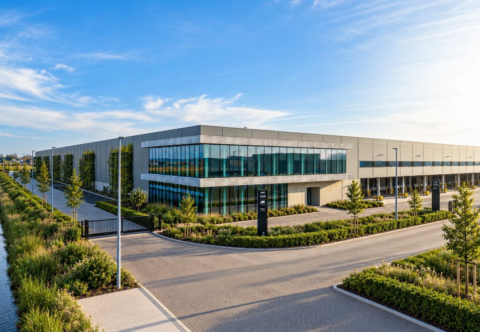
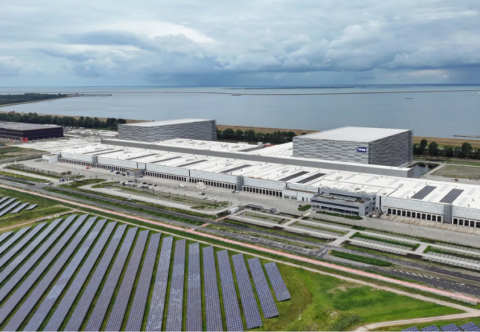
A third trend recurring in logistics real estate is sustainability. "What you first saw in the office sector, you now also see happening in logistics. More and more distribution centres are equipped with solar panels, LED lighting, recycling of heat, water, waste etcetera." According to Peters, robotisation is also leading to more sustainability. "Robotisation is efficient and increasingly eliminates human error and waste." Sustainability also lies in the reuse of existing real estate, says Peters. "Especially in urban areas or in so-called redevelopment of brownfield sites (unused land, ed.) In addition, an E-fulfilment centre can be housed perfectly well in a conventional logistics building in suburban areas." As an example, Peters mentions Venlo, a logistics hotspot in Europe that is certainly a good location for retailers or e-tailers, even though there are mainly conventional logistics buildings there. "Many modern buildings are very flexible because the load-bearing capacity and floor quality are good and the clear height is between 10 to 12 metres. They have many loading docks and enough space for trucks to manoeuvre. If those basic features are there, you can further improve the building with various sustainability elements."

On 14 February, Roger Peters of PATRIZIA Logistics will debate with fellow investors Montea and Goodman during the Logistic Real Estate conference. Based on their projects, you will hear what opportunities they see. Which locations and what kind of distribution centres do they find most promising? Would you like to attend? Register here.
Image: Agristo's forty-metre high freezer warehouse in Tilburg, realised by Egemin. According to Roger Peters, such high-rise warehouses can provide a solution for the lack of space in European cities. Source: Agristo Facebook
Editorial LogistiekProfs