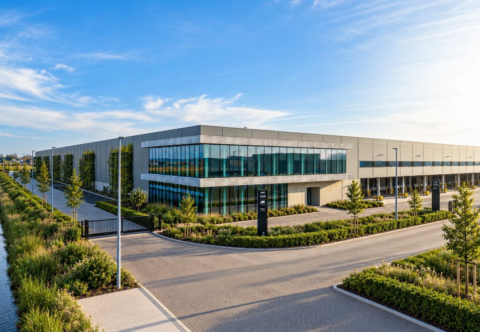
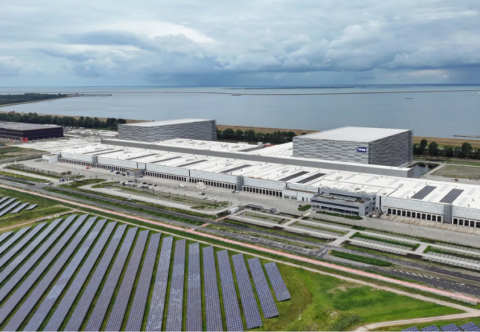
Investment companies are mainly interested in standard distribution centres that will quickly be given a new function after the tenant leaves. However, current developments increasingly demand specifically designed distribution centres with far fewer opportunities for reuse. Think of the e-commerce warehouses and XXL DCs that are sprouting up, especially in Brabant and Limburg. Investors will have to take more risks.

Who can predict the impact of a new technology such as 3D printing on logistics chains in 10 years' time? "In recent years, we have seen that it is very difficult to look ahead. Yet that is exactly what we ask from our tenants when we agree a lease term," argues Jo De Wolf, ceo of Belgian real estate investor Montea.
A huge amount of logistics space has been added in the past few years. These are less and less often the standard DCs of 20,000 or 30,000 square metres, but mega-sized properties of 40,000 square metres or more, sometimes with specific requirements for e-commerce distribution. What to do with those properties when they become vacant because they no longer meet the changing needs of the tenants? "In the Netherlands in particular, these secondary properties could become a big problem for investors," De Wolf argues.
At spot four
Montea sees the fixed lease term of a distribution centre becoming less and less relevant. When assessing whether it is worth investing in a logistics property, 'duration' only comes in at spot four. Location, building type and tenant type are criteria that weigh more heavily. "Because we are in such rapidly changing times," explains De Wolf.
Real estate investors can only distinguish themselves in the future if they start working with flexible forms of construction and are willing to take more risk. That is only possible if the best location is chosen. De Wolf: "We are all sitting on the same ice floe. That floe has to grow, but that will happen in a different way than we currently think. Everyone is therefore trying to put their risks elsewhere."
Automation
The increasing interest in automation and mechanisation is also having an impact on property valuations, says De Wolf. "At the airport in Brussels, we erected a 30,000-square-metre building for DHL. We invested 30 million euros in that building, and as much as 100 million euros in the sorting facility. So the cost of the building is only a fraction of the total investment."
Kraft Heinz That tenants cannot and do not want to look as far ahead is proven by Kraft Heinz. The food producer with a factory in Elst is currently moving into a new distribution centre along the A15 motorway, halfway between Arnhem and Nijmegen. This is a building that logistics service provider Nabuurs rents from Goodman and shares with shippers SCA and Mars. "We deliberately looked at a period of five to seven years in the tender, not 10 years," explains Tom Tillemans, former head of logistics at Kraft Heinz.
Location was an important selection criterion, says Tillemans. He refers to the good access via the river Waal and the ongoing talks about building a rail terminal along the Betuwe line. "In Elst, we produce ketchup for the whole of Europe. This involves large volumes, which we want to transport by water or rail wherever possible. Also given the looming driver shortage, it is important that we can use other modalities for long-distance journeys."
Marcel te Lindert - logistics and supply chain journalist
Image at top: Investors Philippe Van der Beken (Goodman), Jo de Wolf (Montea) and Roger Peters (PATRIZIA Logistics) on opportunities in logistics real estate.