 By focusing more on circular processes, the Netherlands can remain a leader in logistics. Says Paul Bleumink, managing partner Buck Consultants International "Logistics and the logistics property market are doing well. Now it is time for the sector to start working on its carbon footprint."
On 14 February, Bleumink will give insight into the main trends and developments in the logistics real estate market during the Logistic Real Estate conference. Topics such as e-commerce, circular economy and the (wild) growth of hotspots will be discussed. Will the market be crowded? In conversation with LogistiekProfs, Bleumink gives a sneak preview.
The take-up of European logistics real estate has been rising since 2013. To what do we owe this?
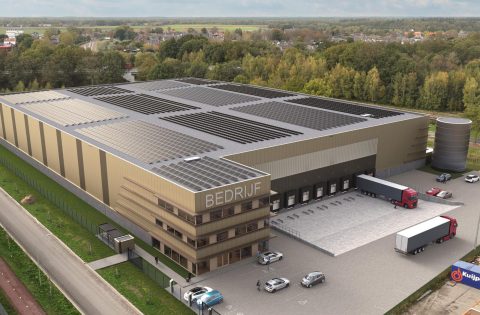
'We mainly see an increase in the take-up of new logistics real estate. There are two reasons for this: e-commerce and economies of scale. The fine-grained processes involved in e-fulfilment do not fit into existing real estate. So this creates growing demand for new logistics buildings. The second cause is economies of scale. Quite a few mergers of distribution centres are taking place. Many logistics service providers want to be able to grow with their customers and merge the operations of several customers in one location. This also leads to older warehouses sometimes being abandoned and the demand for new and large-scale logistics real estate rising.'
How does the Netherlands score compared to the rest of Europe?
'We are actually competitive in almost all facets of logistics in the Netherlands. That has to do with accessibility, a wide range of transport solutions and the way we organise transport. We also do better than our European competitors on the customs & tax aspect. What we score less well on is the cost of real estate. In Belgium or Germany, land costs are around EUR 40 and here they are EUR 150. This is simply because of the pressure on space. Competition for land is higher here and this is reflected in the price of real estate. We also score lower on the labour aspect. Due to the rapid growth of logistics, we suffer from labour shortages. An e-commerce distribution centre quickly employs 500 to 1,000 people. This is partly filled by flex workers from abroad, but you also need managers in warehouses, planners, drivers who have to serve customers in the national market. In other European countries, they probably suffer less from this because the unemployment rate is higher there, especially in certain regions.'
How do we solve that staff shortage?
'By focusing on the labour market and innovation. We now compete in the Netherlands mainly on the hard factors: space and accessibility. In the future, that won't be enough. It has to be a logistics ecosystem with room for innovation and cooperation. Frontrunners in the sector are already betting on this, which is smart, because to recruit staff you have to be innovative.'
Is robotisation the solution?
'Yes, that could be a solution in the long run. Albert Heijn is e.g. building an automated DC in Zaanstad to replace a DC that now employs about 600 people. Not all of them will be needed in that DC in the future. So in time, fewer hands will be needed. Those hands are already partly filled by flex workers from abroad. This, in turn, leads to a growing demand for people who keep everything on track: managers, planners, etc. There remains a crying shortage of these. People are too quick to think that we are going to solve the labour market problems with automation, but it will take some time for that to happen. The systems are still very expensive. A number of companies are pioneering now, and we will only be able to piggyback on that in a few years' time.'
Back to logistics real estate for a moment. Why are Limburg and Brabant so in demand?
'If you want to supply the Benelux or Germany, it's better to be in the south of the Netherlands. South Holland would also be possible, of course, but there the availability of large plots of land is a problem. In Brabant and Limburg, you lie well in the market and have the space. There is also a planned response to this trend in these regions. In a number of places in Brabant, large plots are being freed up for logistics. In Venlo and South Limburg, too, many sites are still available.'
Research by real estate consultant CBRE last November revealed that - due to limited land availability - the demand for vertical solutions for logistics real estate is rising in Europe. Are we going to see this trend in the Netherlands too?
'That is difficult at the moment, because distribution centres are often not yet automated. If you still do a lot with forklift trucks, for example, horizontal working is easier and cheaper. As soon as we start automating more, we can also go up. You can already see this in cold stores. I think we will definitely have to deal with more high-rise buildings in the Netherlands.'
It is striking that as a firm you pay a lot of attention to circular logistics. You don't read much about this. Why is this an important topic for you?
'That's basically our message to the sector. Logistics and logistics real estate have been doing well recently. Therefore, it is time for the logistics sector to start working on its carbon footprint. Companies need to look beyond the lowest price for a square metre. We need to ask ourselves what our contribution is to making chains more sustainable. After all, that is what customers demand from the sector.'
Are we really doing that badly? Companies like Lidl and Bol.com only last year received a BREEAM certificate for their sustainable distribution centres.
'That is indeed going well, but circular logistics is more than just a sustainable building and sustainable energy. It is also about multimodal transport and organising return flows, for example. That requires new concepts, but hardly anyone is working on that. Because of the many home deliveries, resulting in many delivery vans in residential areas, logistics is quite a polluting sector. I expect that in due course there will be extra taxes on fuel and that manufacturers will ask logistics service providers: what can you do to reduce my CO2 emissions? If we are able to deliver a parcel to someone's home, why are we not able to organise very finely-meshed return flows in logistics: from the consumer back to the manufacturer? A number of manufacturers are working on this, but it happens sparsely. In the Netherlands we lead the way in organising European distribution to the capillaries for international brands, now we have to become the top player in circular logistics as well'.
Want to know more about current trends and developments in logistics real estate? Visit the Logistic Real Estate conference in Nijmegen on 14 February. You can register here.
Editorial team LogistiekProfs