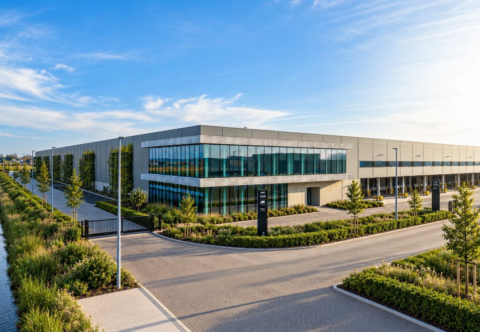
"Develop future-proof buildings that are prepared, among other things, for unmanned trucks and robots." This was one of the pieces of advice with which Sven Bertens, head of research at Jones Lang LaSalle, concluded his presentation at the Logistics Real Estate 2016 congress. What might a future-proof warehouse look like?
To be honest, I cannot yet imagine much of a warehouse prepared for unmanned trucks and robots. That unmanned lorries will eventually come to load or unload goods is a given as far as I am concerned. That robots will increasingly take over tasks from warehouse workers also seems to me to be just a matter of time. But do those unmanned trucks need more manoeuvring space or do we need to reinforce the floor for all those robots? I wouldn't know. Nevertheless, there are definitely some issues that should be factored into the construction of new warehouses and distribution centres. Some ideas:
1. Powerwalls
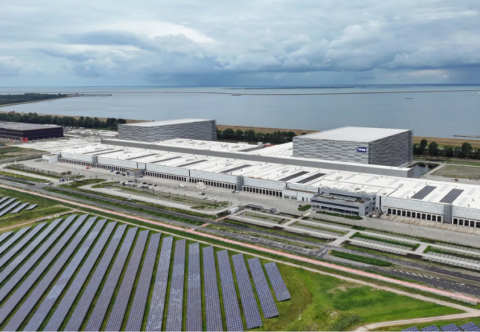
A sustainable building seems almost a given these days. Is a logistics building delivered at all anymore without BREEAM certification? A low-energy or energy-neutral new building is often more interesting than an existing building simply because of the much lower operating costs. Nevertheless, there are still steps to be made in this respect too. Consider large batteries that can temporarily store energy from rooftop solar panels to charge the traction batteries of lifting and warehouse trucks at night. Powerwalls, Tesla calls them. They seem to be already in place in some distribution centres in the form of large stationary batteries.
2. Demountable
Arthur van Dijk, president of TLN, pointed it out again during the congress. Which company today can still look five or 10 years ahead? So take that into account when building a warehouse or distribution centre and build in the necessary flexibility. Near Schiphol Airport, a circular business park is even being built, with buildings that can be completely dismantled. Jeanet van Antwerp of SADC even told me that farmers should be able to grow grain again within two years when the business park is abandoned. This means, among other things, that as few pipes and cables as possible will be laid in the ground.
3. In the city
Retailers in particular are increasingly considering opening small depots close to or in the middle of cities, partly to serve webshop customers quickly. At the conference, Bram Verhoeven of Prologis cited the example of Amazon, which plans to leave its mega distribution centre near New York to open five smaller warehouses closer to the city. One of the warehouses will even be set up on the fifth floor of an office building in the middle of the city. This does not seem logistically ideal, but it does offer the possibility of delivering to consumers in the area within an hour or even faster.
No doubt there are more ideas about future-proof warehouses. What is your vision? Leave a comment below.
Stay up to date
Sign up now for the LogistiekProfs newsletter and receive the latest news, trends and offers.