The Internet of Things not only offers possibilities within the four walls of the warehouse, but can also ensure integration of internal and external logistics. As a result, logistics systems are becoming faster and more efficient. Developments follow each other in rapid succession. Trade fair Logistica gives an insight into developments in this field.
The Internet of Things allows devices and machines to exchange data with each other via the internet. Based on this, these devices are able to act independently. Interaction between systems is by no means a new phenomenon in logistics. Roller conveyors, warehouse cranes, sorting systems and automated guided vehicles have always been exchanging data so that each component can perform the right action at the right time. Yet the Internet of Things goes a step further. Namely, there is a trend towards decentralised control. With more intelligence in components, they can make faster and better decisions about, for example, the best route a box can take across a system of roller tracks.
Also read: Four reasons to get started with big data
Systems feed themselves
According to Jan Vercammen, ceo of Egemin Automation, these systems "feed themselves". "They monitor themselves, analyse how things can be done more efficiently and are therefore continuously optimising themselves." He refers to developments in car driving. Contemporary navigation systems constantly adjust the route based on the traffic congestion. We are going to see this development in logistics as well.
Maintenance
A big advantage of Internet of Things is that systems can tell themselves when they need maintenance. This prevents systems from shutting down because a component has failed. Moreover, there is no need to schedule maintenance that is not actually needed.
Connecting internal and external logistics
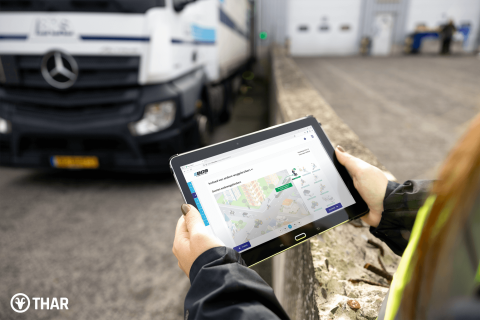
Vercammen also mentions another aspect to IoT, namely connecting internal and external logistics. "These are now often still separate worlds, between which there is too little interaction. Imagine, however, that taking traffic jams into account, we could make a reliable estimate of the arrival time of trucks. If the truck communicates that to the warehouse management system, that system can automatically adjust the planning so that goods are ready on the shipping floor at the right time. Connectivity in the supply chain will have to improve even further."
Challenges
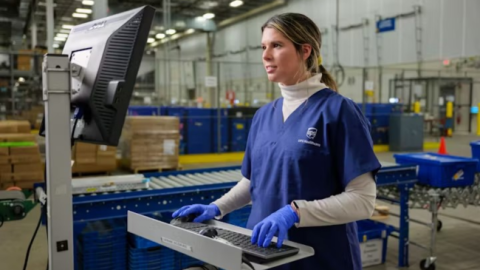
Yet there is still a long way to go before these possibilities become reality. Steps will have to be taken in terms of standardisation. Smart machines and devices will have to be linked together even faster and easier - plug and play - and be able to exchange data with each other. This also applies to lifting and warehouse trucks, argues Vercammen. "We are moving towards a future with hybrid solutions, in which people and machines will work closely together. Manual processes and systems will remain necessary because some processes can never be fully automated."
The Logistica trade fair will take place from 10 to 13 November at the Jaarbeurs in Utrecht. You can register for the fair for free here.
Editorial LogistiekProfs