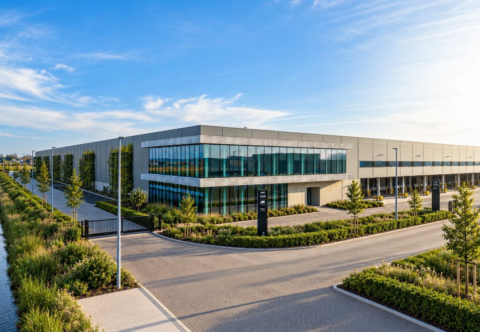
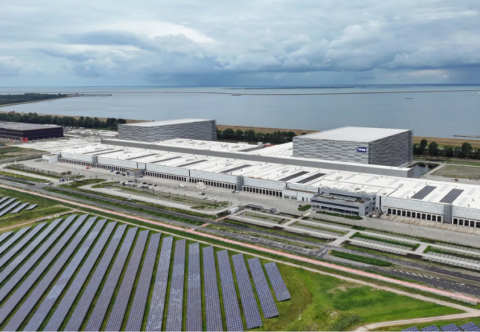
Never before have so many XXL distribution centres been built in the Netherlands. Nineteen mega distribution centres opened their doors in 2019 and another 12 were announced. It further fuels the debate about the 'doom of the landscape', argues Buck Consultants International (BCI).
The total of 31 XXL distribution centres (each with an area of at least 40,000 square metres) accounts for some 12,400 jobs. The total area is over two million square metres. The increase in these large-scale distribution centres calls for clear policies, according to consultancy BCI.

From 2013 to 2019, a total of 101 XXL DCs were opened or announced. The top region is North Brabant with 38 distribution centres during this period.
BCI does not expect the boom in large distribution centres to abate in the coming years. "Efficiency in larger logistics centres remains an advantage. Moreover, e-commerce distribution centres need more space because they need to stock many products and work space is needed to handle returns," observed Kees Verweij, partner at the consultancy.
The debate about the proliferation of distribution centres arose last year, partly due to an advice from the College of Government Advisors (CRa), but BCI calls that advice "moderately well-founded and quite one-sided". "We advocate a National Taskforce that will take a balanced view of all the effects of these XXL distribution centres. Economic and labour market effects, but also the impact on landscape, environment and nature. Mobility and congestion effects and what this means for municipal land revenues should also be mapped," said René Buck, director Buck Consultants International. The importance of logistics for the modern manufacturing industry and the higher training requirements in modern distribution centres must also be properly considered.
Clustering large distribution centres, as the CRa recommended last year, can backfire, BCI believes. "Clustering can certainly have advantages for companies. Think of well-connected locations with good facilities. But clustering can also lead to negative mobility and congestion effects, lack of choice between locations and even more overheated regional labour markets."
The BCI wants a National Taskforce to be appointed. It should tackle the problem at three levels.
Level 1: Regional Business Park Planning
Space is needed for 5,500-9,500 hectares of business activity over the next ten years, roughly half of which is for logistics, according to recent research by Buck Consultants International and EIB commissioned by the Ministry of Economic Affairs and Climate Change (basis: 2 per cent economic growth). Quite a bit of this demand can be realised on current and planned sites, but some is also expected not to. If national economic growth targets are to be met, companies should also literally be given room to expand. Balanced and flexible planning of business sites should be better addressed. BCI suggests distinguishing between:
- logistics parks, which are further away from residential development and are made especially suitable for large-scale logistics; some regions lend themselves better to large-scale logistics activity than others because of location, (multimodal) accessibility, logistics ecosystem and other (conflicting) space claims. In selected regions, new logistics parks for large-scale DCs can be developed as a priority;
- mixed industrial sites: sites that also house logistics, but also other types of business activity; often also located closer to residential buildings and thus mixing with other functions comes into the picture;
- restructuring existing sites, where there are still opportunities for so-called brownfield development.
Level 2: Individual sites
The realisation and design of logistics-related business parks should consider conditions to be set on building size-to-lot size ratio and option policy.
Level 3: Building level
Require sustainability and multifunctional use (e.g. solar panels) of warehouses and explore options for multi-storey construction.
René Buck: "Especially the first level of regional business park planning is crucial. We need to take a better and more flexible approach to business park planning in the Netherlands to prevent the discussion from unfairly focusing only on individual logistics centres that want to locate somewhere."