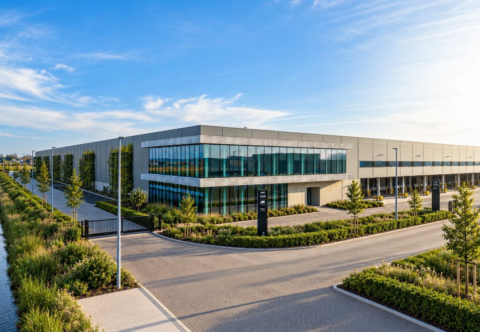
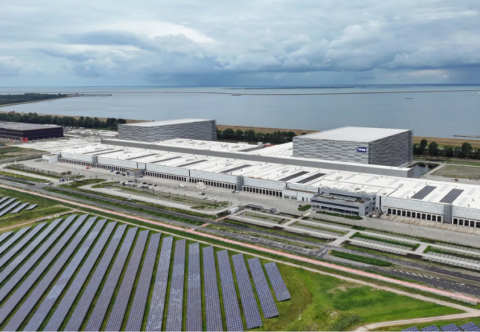
The money is rolling in the logistics property market. In 2017, all records were broken; the take-up volume of logistics real estate rose exponentially and three billion euros worth of investments were made. Good news, but it also raises questions. For instance, are we not doing too well? And do we still have room in logistics hotspots? Sven Bertens, Head of Research at real estate consultant JLL, explains.

Bertens speaks of an 'exceptional' year when looking back at 2017. In real estate, all records were broken, largely driven by the improved economy and continued low interest rates. The take-up volume of real estate has been rising for a number of years now and already amounted to around 1.4 million square metres in the first half of 2017. This leads to a very low vacancy rate and growing demand for new construction.
New distribution centre construction is largely driven by the scarcity of readily available modern logistics property. "The rental supply in the Netherlands has been declining sharply for several quarters in a row. As a result, many parties have to initiate their own new construction. One example is Inditex, which invested 100 million in the construction of a distribution centre in Lelystad last year. This was the largest transaction of 2017," Bertens explained.
Investors are also capitalising on the scarce rental supply in the Netherlands. "New construction is currently more attractive to them than buying existing property with a tenant. In 2017, we achieved a record three billion euros. Many investors have even started building speculatively, i.e. building without already having a tenant for it."
Is it going too well?
Speculative building. That rings alarm bells for many, Bertens acknowledges. "As soon as we see such developments, people often start to worry. Aren't things going too well? We don't think so. No unnecessary risks are being taken yet. The market is developing at a healthy level. In some places in the Netherlands, there may be a bit too much speculative development, for instance around Schiphol Airport. Due to the many new construction initiatives in that region, rents may start to fall there. But in the long term, we do not foresee a problem there."
The risks created in the market come mainly from the rental guarantees that developers issue when they sell their development. Bertens explains: "If within 12 or 24 months of delivery, no tenant has been found, the developer will pay the rent amount to the new owner. That will carry significant risks in some cases."
2018: demand for new construction continues
JLL expects the market to continue to pick up in 2018, albeit slower than last year. Demand for new construction continues, but investment volumes are declining. "Many of the buyers in the Dutch logistics market are investing for the long term. They are not going to sell it after just one year. We are not going to reach the three billion of 2017 this year."
In traditional hotspots, space for new construction is now scarce, especially as these are often large-scale centres. Developers therefore divert to so-called 'secondary hotspots'. This also applied to Inditex, which chose Lelystad over hotspot Limburg because of the amount of space and staff available. Bertens: "Space is starting to become a challenge. The oil slick is expanding as investment developers are forced to move to the outskirts. Staffing is also an issue, but mainly because the job profile of employees is changing. Companies are looking for more than the traditional forklift driver. That is why in Tilburg, for instance, you see them working on better public transport accessibility of business parks. Forklift drivers have a driving licence, but students do not. They are now driven to the DCs. In this way, they are trying to fill the staff shortage at traditional hotspots."
 On 21 February, Sven Bertens will speak at Logistiek Vastgoed Nederland 2018. During this day, you will gain insight into the latest trends and developments in logistics real estate. Think about impact of e-commerce, digitalisation, robotisation and circularity and a unique excursion to hotspot Borchwerf II. Register for Logistics Real Estate here.