Distributors who want to be future-proof would do well to scrutinise their current business model. So says ING in the report 'The future of urban distribution'.
With all the social objectives and the rise of e-commerce, the dynamics of physical distribution are changing very fast. According to ING, the world of urban distribution will look substantially different in ten years from today and this brings challenges for companies.
Urban distribution is top sport
Retailers demand urban distributors to be fast, efficient, flexible and sustainable. It is therefore crucial that companies have their processes in place and continuously adapt and improve. "Often retailers set sustainability requirements, but it shows strength if a company is active in this on its own initiative," ING said. Consumers want faster and faster deliveries and, in addition, the return flow in this segment creates new challenges. This makes success in urban distribution top sport.
What can distributors do to future-proof their business model? According to ING, it is conceivable that small distributors will become more commissioned by larger logistics providers. In some cases, distributors have already broadened or specialised, but they are far from being prepared for the future. ING gives a number of strategic options for this:
- (Intensive) cooperation with partners in traditional distribution;
- broaden into other segments such as goods for the hospitality (food-service) or healthcare sectors;
- specialise in niche markets (large/divergent goods);
- become active or specialise in logistics services (betting on e-fulfilment).
Urban decoupling points
In the report, ING reports that there will be an important role for dedicated decoupling points on the outskirts of cities (urban distribution centres) in the future. Currently, this is still in its infancy, but such initiatives are already active in Amsterdam and Delft, for example. This need not always be for one urban core, but regions with several cities can cooperate; for example, the city triangle of Deventer, Zutphen and Apeldoorn.
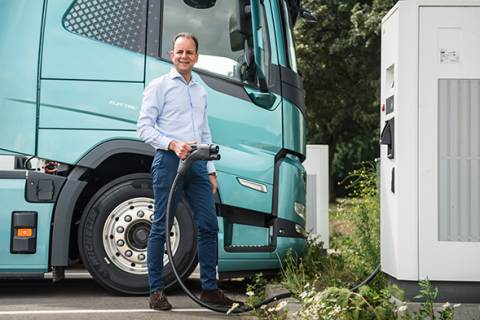
In practice, this involves 'cross-docks'. These are logistics centres that allow companies to transport small shipments in groups without the need for interim storage. Goods are brought in from supplier distribution centres and moved from incoming to outgoing vehicles within a short time. An additional advantage is that the time of delivery no longer depends on the opening hours of shops or restaurants. From these hubs, transport can be organised with smaller and cleaner (electric) vehicles to the city centre. Although there are cost advantages for shippers, active promotion is still needed to make this a success.
View the full report here.
Editorial LogistiekProfs