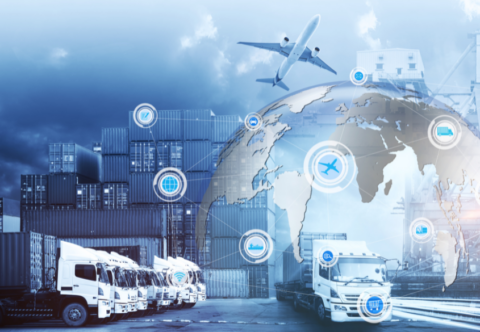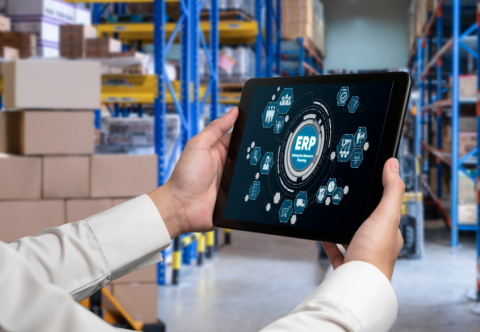
Data will become this century's most important commodity, rather than oil, predicts technology entrepreneur and author Peter Hinssen. According to him, logistics is lagging behind and action is required to survive.
To become future-proof, logistics still needs to take the necessary steps. That is the conviction of Peter Hinssen, technology entrepreneur and author of the book 'The Day After Tomorrow'. In particular, business models and processes need to be shaken up. "Sometimes logistics still runs on models from the 70s and 80s," he says. Because, Hinssen also sees in practice, many companies involved in logistics still think too much in physical and too little in data. "And that while logistics has received a huge boost thanks to digitalisation. Just look at companies like UPS. Because consumers are ordering more and more parcels, services like that are increasingly busy."
Facial recognition
Logistics service providers need to become aware of the fact that data - in the sense of data - is becoming increasingly important, according to Hinssen. "Players that respond to this can offer better services and make a difference," he said. If companies fail to do so, they will soon be overtaken by players we are currently unaware of. Hinssen cites Amazon as an example. "They ship many parcels now, but recently bought the Ring doorbell company. That startup deals with access based on facial recognition, among other things. When it comes to improving the customer experience, such a bell is very useful, because soon Amazon's delivery driver will be able to go in himself to drop or install a parcel without anyone having to be physically present. Then we are no longer talking about the last mile, but the last metre. The customer experience will be even better and delivery cheaper."
Flexibility
According to Hinssen, entrepreneurs must above all realise that they need to be flexible. "In the 20th century, the place in the value chain was a fixed one. Everyone contributed his part. This century, in my view, is about agility and speed. Traditional departments with bosses are disappearing and work processes are becoming fluid. You shouldn't go along with every hype in this area, but realise that work is changing and be aware of what that does for the company."
One example an entrepreneur can anticipate is the further automation of warehouses and autonomous driving. Hinssen: "That will make a lot of work redundant. Moreover, it is a huge improvement in safety and improves the quality of life, because standing in traffic jams for hours, for example, does not seem desirable to me. We do have to ask ourselves what we do with the drivers. We have to get creative with that and start thinking about retraining. What can we do offer?" When will the time come and trucks drive themselves to their destinations? Hinssen thinks it will be by 2030. "The next 10 years will be a rollercoaster full of ups and downs in terms of self-driving vehicles. Accidents will happen and trials will pass with flying colours. This is necessary to achieve the ultimate goal of safer and more efficient transport."
Europe needs to wake up
In his book 'The Day After Tomorrow', Peter Hinssen also discusses Europe's place in the economy. According to him, Europe needs to be alert and do everything possible not to miss the next digitalisation battle. "China and America have their own social media, search engines and giant online shops like Amazon and Alibaba," Hinssen lists. "We lost the first battle, which was about consumers, but there are still opportunities. The next digitisation battles are about business-to-business and transactions. That's where we can still make a difference. But it is five to twelve."
This article is part of Evofenedex's ICT&Logistics special. Also getting started with data? Then come to the ICT & Logistics trade fair in Jaarbeurs Utrecht on 7 and 8 November. You can register here.