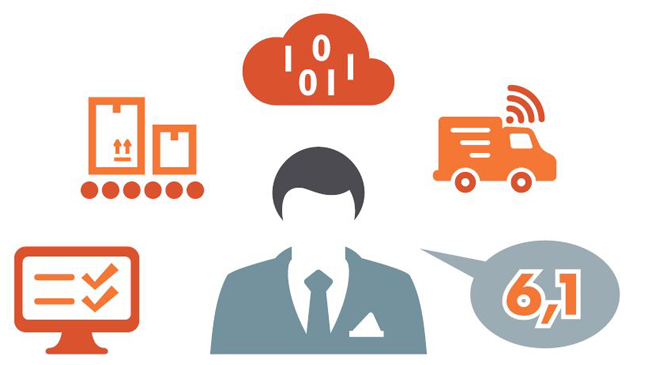
Dutch trade and manufacturing companies are not yet ready for a future with data and digitalisation in their logistics process. In fact, companies give themselves a meagre 6.1 for the current degree to which logistics processes are automated and digitised and the extent to which real-time data is used. This while eighty per cent of entrepreneurs indicate that data and digitisation is an important to essential element for the future of the company. To maintain the Netherlands' top logistics position and meet customer demands, it is crucial that Dutch trading and manufacturing companies get serious about data and digitalisation.
evofenedex, the representative of the trade and logistics interests of 15,000 companies, concludes, based on the results of the first survey 'Data and digitalisation in logistics', that the current state of digitalisation in logistics is moderate. In most cases, the use of data is still limited to one's own business unit. It is necessary to take the next step and share data company-wide and then also integrate data from the chain and environment into the logistics process.
No data, no turnover
"That trade-manufacturing, service and (wholesale) retail companies rate their current state of affairs with a meagre adequate rating worries us. While there is a lot of talk within the sector about developments such as blockchain, artificial intelligence,truck platooning and 3D printing, our survey shows that almost 70 per cent of companies are not working on these at all. Two-thirds of companies are, however, looking at or already working on insightful supply chains and digital platforms. Clearly, there is a big gap between theory and practice. Especially in the digital world we live in today, data is essential. Because no data soon means no turnover in many cases," said Johan Kerver, member of the evofenedex management team.
No real-time data
Only three out of ten trade and manufacturing companies have logistics data from the chain or the market available. 21 per cent have access to data at departmental level and 42 per cent have logistics data down to their own company level. Available data is mainly used to save costs (efficiency) and improve service quality. More than 70 per cent of logistics processes use data that is not real-time. This is partly because Excel, in combination with other software, is still the most widely used tool in logistics. However, Excel is not necessarily the most suitable programme for processing real-time data. In daily practice, this means that decisions are made and steered within companies based on outdated figures. evofenedex finds this alarming.
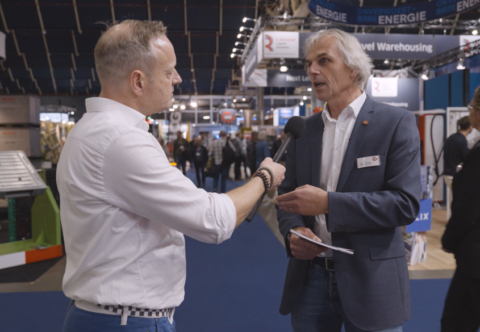
For this first survey 'Data and digitalisation in logistics', evofenedex surveyed a representative group of over 260 managers who are (co-)responsible for the logistics processes in their companies. The full results of the survey can be found at www.linkjeleggen.nl from 7 November and will be used by evofenedex during the ICT & Logistiek fair taking place at the Jaarbeurs in Utrecht on 7 and 8 November. Registration for ICT & Logistics can be done for free here.