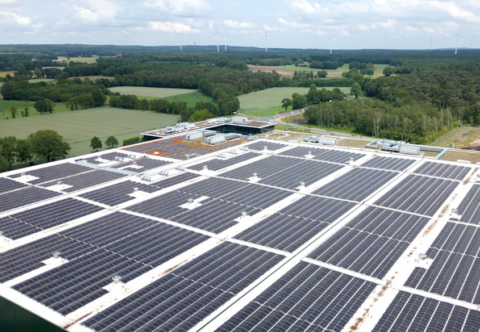
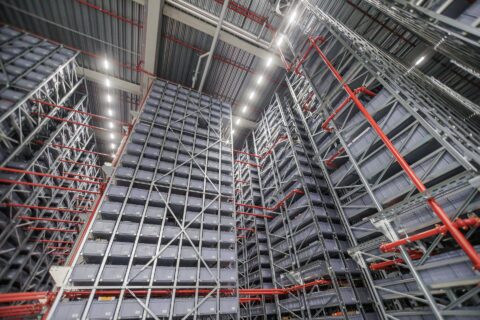
The delivery of consumer goods in the Netherlands can be completely CO2-neutral. To make that possible, transport company TSN Groen is going to build six additional self-sufficient hubs. These will be in addition to the six already in place. From there, electric trucks will handle the so-called last-mile distribution of large consumer goods. That way, 1.5 million deliveries a year can be bundled and delivered CO2 neutrally. The plan involves some €120 million.
The reason for the model, which is explicitly intended for the logistics sector as a whole, is the tightened environmental and climate targets. In 2025, dozens of cities will introduce an emission-free zone for their inner cities, which must be supplied without emissions of CO2, nitrogen dioxide and particulate matter. Then, by 2030, only clean vans and trucks will be allowed to drive in numerous city centres. This poses a huge challenge to all carriers.
Self-sufficient distribution points
TSN Groen, a leader in sustainable operations for decades, has found a logistical answer to this. An important part of this will be self-sufficient hubs (equipped with solar panels, batteries and wind energy solutions) in each province. The initiator itself already has six such distribution hubs, but wants to expand that number to 12.
To avoid 'doom and gloom', as much use as possible will be made of existing construction or redevelopment. Hubs in the Randstad (Rotterdam and Amsterdam) are to be connected to train connections, open water and possibly even air freight. For sustainable delivery to the hubs and transport between those distribution points, TSN Groen plans to run hydrogen-powered trucks.
Range is not a problem
The last-mile delivery of goods, such as furniture, white goods and large parcels, is to be done from the 12 hubs with some 300 electric vehicles. By being close to consumers, the limited range of electric trucks is not a problem.
The model is not only suitable for retail, but also for municipalities, for example, says TSN Groen director Andries Vlot. "Think of supplies for the local library, swimming pool, or town halls. Now things like office supplies, paper and furniture are transported separately each time. Especially in rural areas, this causes unnecessary mileage in fossil fuel vehicles. That is a thing of the past."
By collaborating a lot with different transport companies, goods can soon be bundled on the road, reducing the number of transport movements and maintaining the quality of life and safety in the city and beyond. According to Vlot, the impact is "very big". Assuming that 450 CO2-neutral shipments per day are possible from each hub, we are talking about 1.5 million deliveries on an annual basis.
Second life for returns
Furthermore, the environmental pollution caused by return goods must be ended. Therefore, all hubs will be equipped with a refurb department. Vlot: "Goods that are often still perfectly usable now end up on rubbish heaps or in the desert. We will repair them, preferably by people with disabilities, and then sell and deliver them again from the same hub. That way, they get a second life."
The sustainability plan should employ some 300 people. These include truck drivers, co-drivers, planners and warehouse workers. "We want to employ people who already work in logistics in that province. It will definitely not be a bread robbery."
Total cost 120 million euros
The total cost has been calculated at around €120 million. Vlot by no means sees this high cost as an obstacle. "Investors are already offering themselves of their own accord. Everyone is aware that we have a big problem if soon dozens of cities will be closed to diesel-fuelled vehicles. For instance, I am in talks with multinationals that want continuity for their goods deliveries in the Netherlands." According to Vlot, after the Netherlands, the model is suitable for roll-out across Europe.