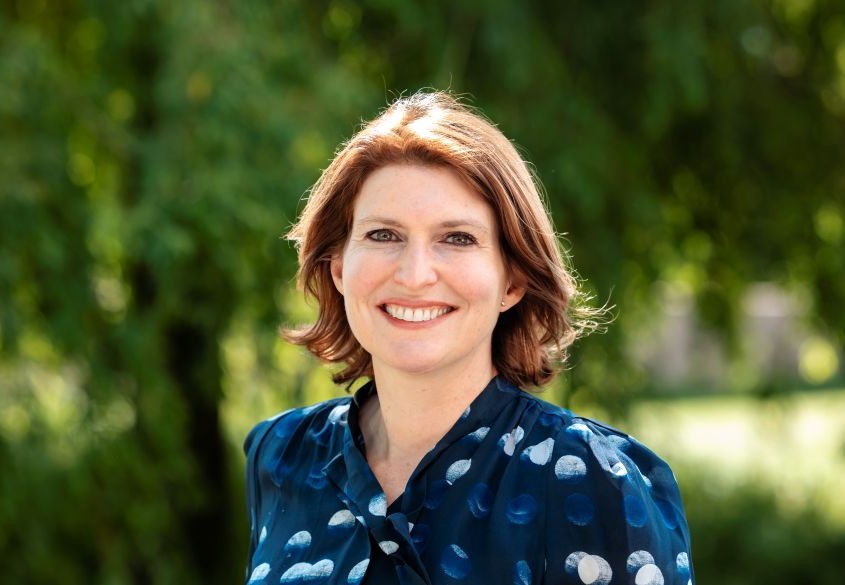

As well as work pressure and overload, boredom and under-utilization can also have a negative impact on performance on the warehouse floor. This is the view of Madelon van Hooff, who was appointed Professor of Occupational Health, Wellbeing & Motivation at the Open University in August. She will be investigating how boredom and underutilisation – for example, as a result of digitalisation and automation – affect employees’ health, wellbeing and motivation. “They may exhibit counterproductive behaviour.”
Entire books have been written about workload, stress and overwork. But relatively little attention has been paid to underwork and boredom at work. “Yet we have known for a long time that underload, just like overload, has a detrimental effect on staff performance. That’s something every psychology student learns in their first year,” says Madelon van Hooff. “Although I get the impression that this is changing. In the media, alongside ‘burn-out’, you’re seeing the term ‘bore-out’ pop up more often.”
Van Hooff trained as an occupational and organisational psychologist and has worked at various knowledge and research institutions. She has been conducting research into underutilisation since 2014. Last year, she even published a book on the subject: ‘More than doing nothing: the psychology of boredom at work’. As Professor of Occupational Health, Wellbeing & Motivation at the Open University, she has the opportunity to take that research further. “I see my appointment as a professor as recognition that underutilisation is an important issue.”
Fear for their jobs
Underutilisation occurs in the office, but also in environments involving physical labour, such as warehouses. Possible causes include increasing digitalisation, automation and robotisation on the warehouse floor. Van Hooff can well understand why this is rarely discussed. “Under-work is generally less visible than overwork and is often accompanied by a sense of shame. As an employee, you make a good impression if you say you’re busy, not if you say you don’t have enough work. And sometimes people are afraid of losing their job. Or of having fewer hours scheduled if they’re on a flexible contract.”
Whether under-utilisation actually occurs varies from employee to employee. Some are more susceptible to it than others. “In addition, the nature of the work plays an important role. We’re talking about both the quantity and quality of work,” explains Van Hooff. “Too little work can lead to boredom. But boredom can also occur even if an employee has to work very hard. For example, when the work is mind-numbing or repetitive.”
Counterproductive behaviour
Ideally, therefore, the work should be neither too difficult nor too easy, neither too much nor too little. It should offer sufficient variety and enough autonomy to decide how you want to carry out the work. In an environment where you are valued by your managers and have good rapport with your colleagues. “These are all factors that have a positive impact,” says Van Hooff.
If these conditions are not met, motivation may decline. “As a result, employees may display counterproductive behaviour. They withdraw from work by turning up late, taking longer breaks or calling in sick when they are not actually ill. They slow down their work just to pass the time,” explains Van Hooff. “And ultimately, they may develop symptoms of depression or stress. They may slip into a passive state in which they get absolutely nothing done, with all sorts of negative consequences for the company and the employee themselves.”
Critical thinking switched off
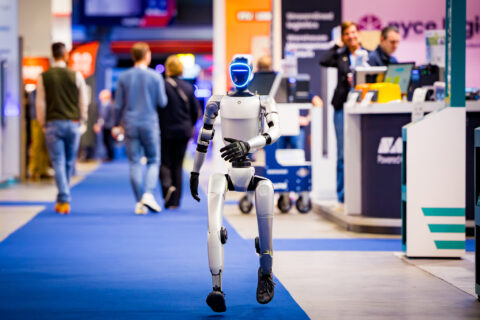
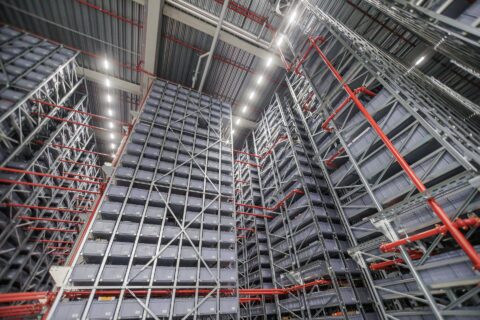
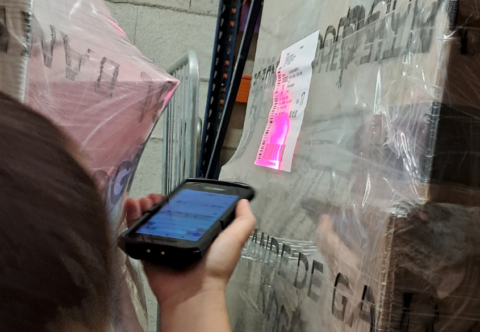
Underutilisation is also a risk in warehouses, partly due to the increasing digitisation, automation and robotisation of processes. Whereas staff used to be given a paper list of order lines and were allowed to decide for themselves how to process them, they are now guided step by step by smart software systems. Thanks to mechanisation and robotisation, they no longer need to walk around looking for items, but simply have to take the correct quantity from a bin and place it in a box, in accordance with the instructions on the screen. The need for critical thinking has been virtually eliminated.
“Let me start by saying that you cannot stop these kinds of developments in the field of digitalisation and automation. Companies also need to make a profit and work ever more efficiently. But from a psychological point of view, this is not the best development for employees’ wellbeing,” explains Van Hooff. “The work that remains for employees is rather monotonous and repetitive in nature. It offers little autonomy and involves a relatively high workload. It’s a mix of quantitative overload and qualitative underload. I understand that’s how it works, but there are certainly some risks associated with this trend.”
The most boring job in the world
Van Hooff emphasises that not all employees suffer from this. She recounts the story of the German-American psychologist Hugo Münsterberg, who, as early as 1913, set out to find the most boring job in the world. He found a man who operated a machine that punched holes in metal strips. All he had to do all day was slowly feed those strips into the machine. “That man didn’t find it boring at all; on the contrary, he thought it was fantastic work. Time and again, he found a new challenge, such as doing the work even faster or in a slightly different way,” says the professor. “I recently spoke to a colleague who also did repetitive work, but listened to podcasts whilst doing it. That worked perfectly for her.”
Companies, too, can take steps to prevent under-utilisation. Arrange workstations so that staff can have a chat. After all, pleasant interaction with colleagues is a good buffer against boredom. Or allow people on the warehouse floor to listen to the radio. Or – if safety permits – let them wear earphones to listen to their own playlist or podcast. “And try to ensure variety in the work wherever possible. Sometimes it helps to move staff to a different location where they need to use different skills.”
Research into the impact of AI
One of the topics Van Hooff wishes to focus on is AI. The use of this technology can relieve staff of a great deal of work, both on the warehouse floor and in the office where the planners work. “The consequences of AI are not clear-cut. It depends on the tasks you let AI carry out and the tasks that remain for staff. If you remove all routine tasks from a working day, only the heavy work remains and the risk of overexertion increases. Those light, routine tasks can sometimes be quite nice for recovering from the heavy, strenuous tasks.”
Anyone who relies so heavily on AI that employees are left with nothing more to do than monitor and check the process will see an increased risk of underutilisation. “Employees may then start to get bored and no longer feel challenged. The trick is to find the right balance,” says Van Hooff. “In the coming period, I’ll be looking into how we can set up and fund research into this. And how we can collaborate with other researchers in the process. Underload and overload are, par excellence, themes that we need to examine from various disciplines, not just from the perspective of psychology.”