
Technical wholesalers Rensa and Cebeo are seeing their market change rapidly. To respond effectively to these changes and to facilitate future growth, they are investing heavily in their logistics. This emerged during a panel discussion with both companies at Exchange 2026, an event organised by software supplier Manhattan. Marcel Walvoort, COO of Rensa: “In three years’ time, our operations will look completely different.”
Rensa Family is a group of fifteen technical wholesalers supplying professional installers. The market in which the company, originally based in the Achterhoek region, operates – ranging from heating and ventilation to plumbing and electrical supplies – is changing rapidly. “Take the zero-emission zones where our customers work and where we have to deliver our products. A quarter of our own transport fleet now consists of electric vehicles,” says Marcel Walvoort, chief operating officer at Rensa. “Or consider the house-building factories where entire homes are constructed. We have to deliver our products just-in-time to keep those factories running. Those house-building factories didn’t even exist a few years ago. We have to constantly adapt.”
Danny Gotink partly recognises himself in Walvoort’s story. He is vice-president of supply chain at Cebeo, the Belgian wholesaler of electrical products which, like Technische Unie, for example, belongs to the Sonepar Group. “If you ask me whether market expectations are changing, I’d say yes and no. In their private lives, our customers are all consumers who shop online and benefit from all sorts of digital solutions. They expect the same from us as B2B distributors. We need to offer those same solutions,” says Gotink. “But ultimately, all customers still want us to deliver on our promise to them. That was true in the past, it’s true today, and it will remain true in the future.”
Investing in automation
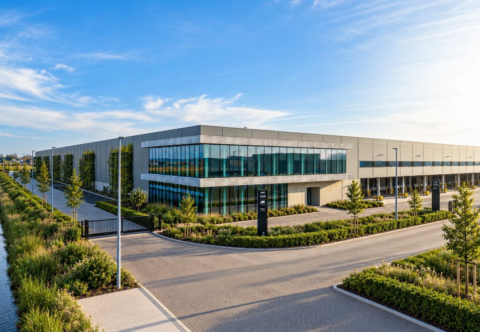
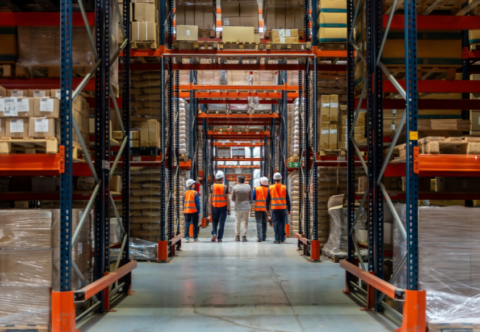
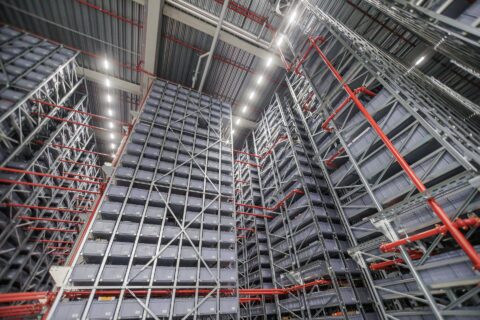
The changing market is forcing both Cebeo and Rensa to invest in their logistics. Three years ago, Cebeo opened a new distribution centre in Blandain, near the French border. “We now supply the whole of Belgium from there,” says Gotink. “We’ve moved from an outdated, manual warehouse to a largely automated one. This is controlled by Manhattan’s warehouse management system, which we also started using three years ago. For small parts, we have a shuttle system from Knapp, but we also have six-metre-long solar panels that are too large for that. The enormous diversity of our product range is our biggest challenge.”
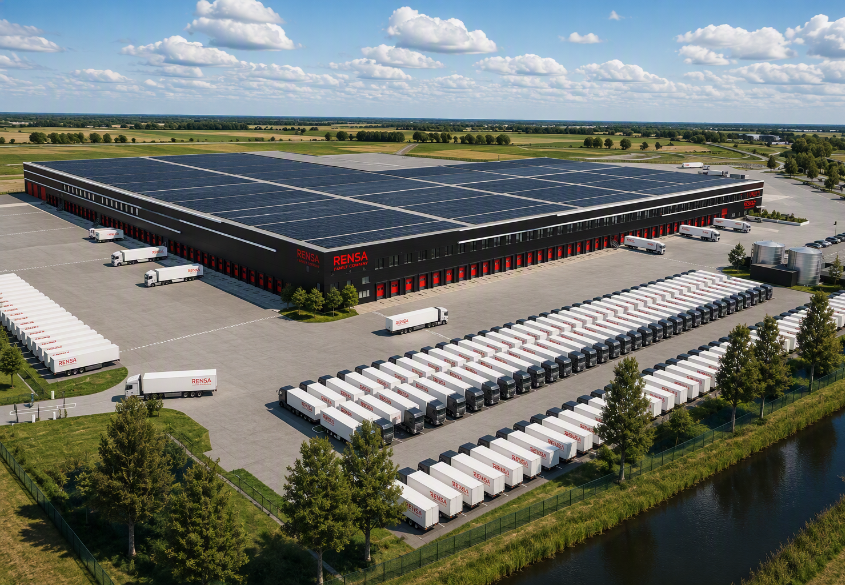
Rensa is in the midst of a major investment. “As far as software is concerned, we are in the process of overhauling our entire IT landscape. Literally every system we use is currently being updated,” says Walvoort, who confirms that Rensa will be using Manhattan’s software for warehouse and transport management. “In addition, we are going to build a completely new warehouse, where we intend to store our bulky goods. It will be largely automated, with the exception of loading lorries. In three years’ time, our operations will look completely different.”
From boxes to crates
Cebeo has invested eighty million euros in its new distribution centre. “That’s a substantial sum, which we naturally need to recoup. We’re working on that. After two years, productivity is 35 per cent higher than at the previous site,” says Gotink. “And perhaps most importantly, we can now grow again. We no longer had the capacity for that at the old distribution centre.”
It is not only Gotink who is satisfied, but also the staff on the shop floor. “We have invested a great deal of money in improving working conditions and ergonomics. For example, we’ve painted all the concrete, dark-grey walls white, which brings more light into the workplace. We’re seeing the benefits of this not only in improved safety, but also in higher staff satisfaction. The new premises represent a significant step forward for our staff. And not just for them. As quality has improved, our NPS score has also risen.”
With the opening of the new distribution centre, operations have also become more sustainable. This is due not only to the building’s high BREEAM score, but also to the use of reusable plastic crates for deliveries to customers. “That saves around a million cardboard boxes a year,” says Gotink.
Charging 66 lorries
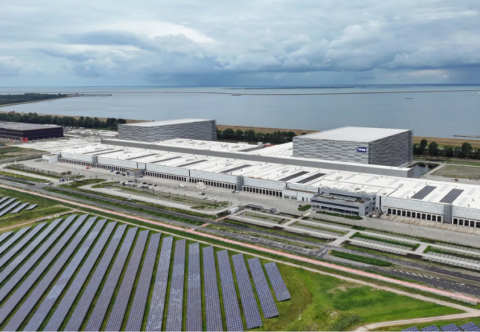
As a family-run business, Rensa also attaches great importance to sustainability. “The family wants to pass on our planet in good condition to the next generation,” says Walvoort. “Last year, we reduced ourcarbon footprint by no less than 40 per cent, and we won’t stop there. We will continue to expand our fleet of electric vehicles. Around 12,000 solar panels will be installed on the new warehouse. Together with a battery system, this will enable us to charge the batteries of 66 lorries. That is enough to electrify the majority of our fleet.”
In addition, Rensa invests heavily in product refurbishment. One of the fifteen companies in the group collects damaged products from installers and refurbishes them. “They then resell them with a longer warranty than the original products. In this way, we hope to convince our customers that they can use these products with complete peace of mind,” explains Walvoort. “We also use cardboard made largely from grass fibres – grass that is harvested locally. We are now looking for companies in the region that would like to join us in this initiative, so that we can scale up the production of cardboard made from grass.”
Change management
Rensa has now visited Cebeo’s distribution centre. “A very impressive operation with a high degree of automation,” says Walvoort. “I am particularly impressed by their solution for cutting cables.”
Finally, Gotink offers Walvoort a few last pieces of advice with a view to Rensa’s new-build project. “It’s all about change management. We know that’s important. We’ve also invested a great deal of time in the transition to the new distribution centre, with its new systems and new processes. Nevertheless, we somehow underestimated the change management aspect. And try to stick to the original transition plan as closely as possible. At times, there was considerable pressure to make concessions, but we still managed to stick to the plan. And that worked out well.”
Would you like to find out more about logistics property, automation or warehouse management? Visit ICT&Logistiek and Logistica Next from 3 to 5 November at Jaarbeurs Utrecht. Register for free via this link.