Shopping Tomorrow's Expert Group of Standardisation Package Labels thinks there should be a standardised package label. Such a parcel label offers new opportunities and better service for consumers, online retailers and service providers. It also increases the efficiency of international parcel distribution networks, which can reduce costs.
During the Webwinkel Vakdagen in Utrecht, Shopping Tomorrow's expert group Standardisation Package Labels presented this to the public. According to the expert group, the Netherlands is lagging behind when it comes to cross-border online sales. Europe is a market that offers enormous opportunities for e-commerce companies, but in order to seize these opportunities, optimal delivery to foreign consumers is crucial. Research shows that this still happens too little and is often inefficient .
Standard parcel label makes it easier
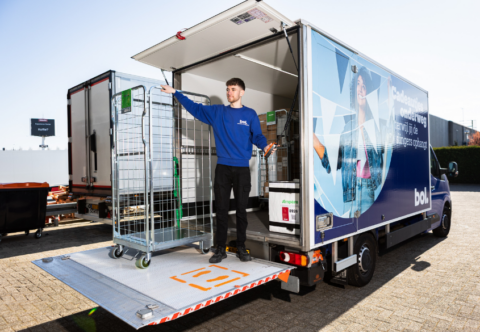
A standard parcel label also facilitates the transfer of parcels to city distribution specialists. It is increasingly common for e-commerce companies to leave delivery to specialists, this 'last-mile' takes place especially in large cities. "A standard parcel label enables new services towards consumers," says Margreeth Pape, Advisor Logistics & Sustainability at Thuiswinkel.org and chair of the expert group. "Imagine consumers will soon be able to track all their parcels through one app, regardless of the carrier that delivers them. Even postal agencies would like nothing more than to offer the possibility of collecting parcels from different carriers. The unique barcode on the parcel label makes that possible."
European Commission
There are also positive noises from Brussels about the introduction of a standard parcel label. The European Commission is promoting the standard parcel label, which they see as an important element in completing the European digital market.
Disadvantages
Yet there are also disadvantages about introducing a standard parcel label. Online retailers have to implement it first, which costs money and time, before they can use it. They also have to make the associated data exchanges and process agreements their own. On the other hand, retailers then have to use parcel labels, which makes it easier to switch carriers.
Editorial LogistiekProfs