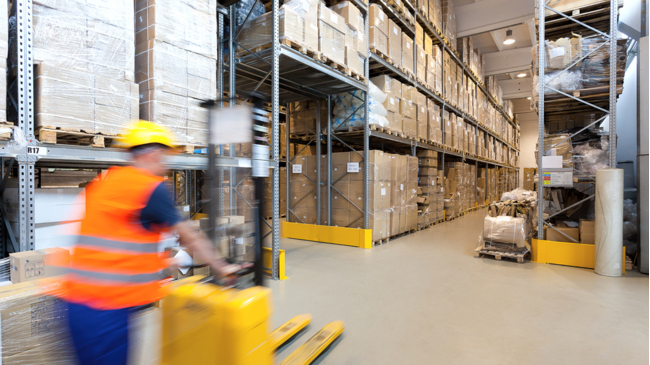
Forklift operators must constantly assess risks. Time and again, they need to assess how they can do their job as healthily and safely as possible. How do you support your employees in assessing those risks? Tom from BLOM spoke to Erik Kooij, senior safety expert, and Kooij gives three tips.
The number of workplace accidents is still rising every year. At the end of April, the Inspectorate SZW released an analysis of the 2016 figures. This shows that logistics still has a lot of room for improvement when it comes to safety. The sector is in the top five sectors with the highest number of casualties. There are 59 casualties per 100,000 jobs. Most accidents are caused by forklifts.
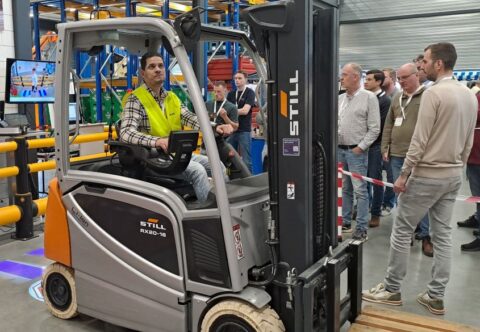
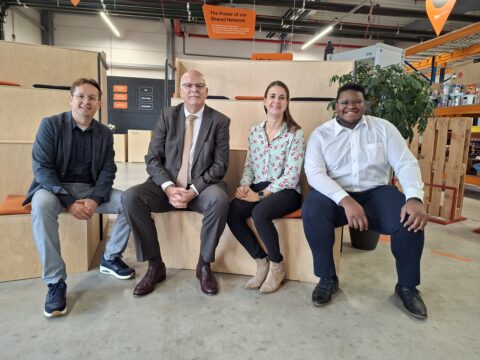
Forklift operators have to make decisions in seconds dozens of times a day while working. Should I reduce speed here or not? Is it safe to pick up that pallet at the top of the rack with my forks? Erik Kooij, occupational safety consultant at ENRGY in Business Group, explains how companies and drivers can better assess these risks.
Tip 1: Identify risks with an RI&E
The first tip is obvious: make a risk inventory and evaluation (RI&E). It is striking that only 27 per cent of companies have an RI&E, even though it is required by law. Larger companies often have their RI&E in order. However, 40 per cent of employees work at a company without an RI&E.
According to Kooij, companies that have identified their risks would do well to share them with employees as much as possible. Even more effective is to make them co-owners of the occupational risks and the action plan to reduce them. Those who know the risks anticipate possible incidents more easily. "Pilots have to maintain their aircraft licence annually. It would be good if forklift operators are also tested in a similar way every year. Do they still know all the risks? Do they know where the bottlenecks are?" said Kooij, who has been involved in setting up the Healthy and Safe Warehouse Code.
Tip 2: Give as much practical knowledge as possible
Educate your employees as best you can. After all, drivers need to know what their machine can and cannot do in order to assess risks as well as possible. Is it possible to brake in time for that pedestrian? Or is it better to avoid him with a steering correction? "Two factors come into play here: mastery of the machine and perception of the risks. The challenge is to be in full control of the machine and to correctly assess the risks every time," Kooij argues.
This requires more than just a valid forklift certificate, according to Kooij. "The question is what that certificate is worth once the driver ends up on a different forklift in a different working environment, for example. It makes a big difference whether you are used to driving a duck or a Ferrari," Kooij says. The safety expert therefore advises giving new employees time to get acquainted with the forklift and the working environment. "Give them an understanding of the modified operating instructions and the organisation's desired safety behaviour. Explain what they should pay attention to. How fast does the forklift pull up? How nervous is the steering behaviour? And make them aware of the environment they will be working in. For example, walk around the warehouse together and point out risk areas. "
Tip 3: Monitor and listen
It is always important to properly monitor the driving behaviour of drivers. Where in the warehouse are the most damage claims made? What mistakes are made over and over again? You use this information to give drivers feedback and make them aware of the risks. "Make them aware of their own safety behaviour and what they can do to improve it. That way they stay alert," says Kooij.
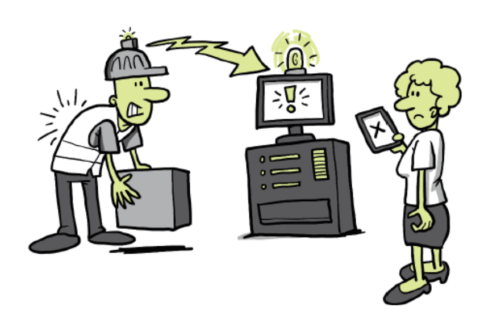
Reports from employees about unsafe situations should also be taken very seriously. After all, they are the professionals who deal with the risks on a daily basis. "In addition, create positive working conditions where drivers can report an incident without being blamed. If they are actually listened to, they feel supported. Then they keep paying attention, which ultimately leads to fewer (near) accidents and, at the core, to improvements in safety and health in the logistics working environment."