After eight months of testing, fashion platform implements two robots in its logistics process. The TORU robots will independently pick and move items in the fulfilment centre in Lahr, Germany.
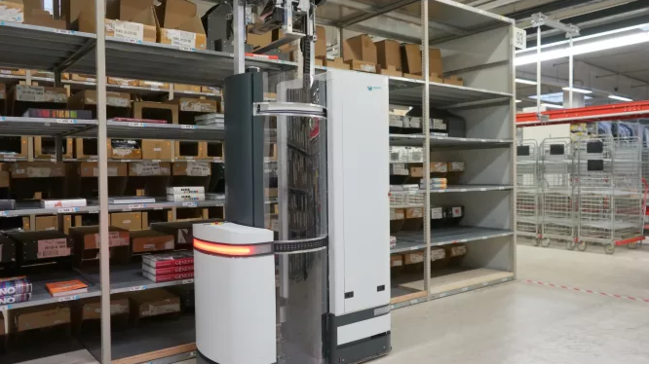
The TORU robot comes from start-up Magazino, in which Zalando recently acquired a minority stake. Unlike other robotic systems - which can only transport entire pallets or crates - the TORU robots can pick up and move individual shoe boxes.
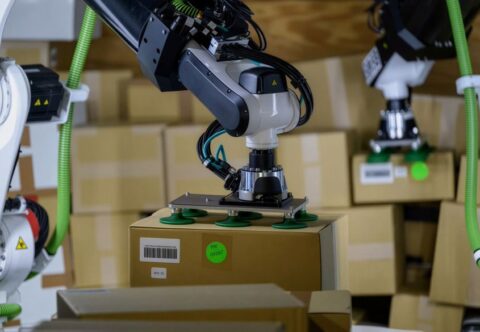
The robot recognises products with a laser and camera system and is then capable of picking items up to three kilos off the shelf independently. The robot's internal storage space provides space for multiple products. This allows the robot to carry multiple items or orders during its journey through the warehouse.
Test period
Over the past period, the company and Magazino tested the robots in an enclosed test room at the distribution centre in Erfurt. During this process, the producitivity of the robots was measured. "Initially, the robots regularly stood still for long periods of time while performing their work due to detection errors or a large calculation time. By reducing these pauses, the number of pick-ups per hour could be significantly increased. However, this number is still lower than manual processing by logistics employees," Zalando wrote in a statement, noting that the idea is that the TORU will perform work that is heavy and not ergonomically sound for employees.
'Robots should spare employees'
After eight months, the robots are now being transferred to Zalando's fulfilment centre in Lahr, Germany. Here there is enough space for the TORU robots and for their transfer and loading stations. In Lahr, the robots will work alongside employees at the DC.
Carl-Friedrich zu Knyphausen, head of Logistics Development at Zalando: "We are constantly testing technologies that take over physically demanding or monotonous work from our employees. Thanks to the TORU robots, our employees are spared non-ergonomic activities. For example, they no longer have to bend down or stand on their toes to grab products from the lowest and highest racks. This does not mean that we want to switch completely to automation, we really aim to make humans and technology work together."