What impact do robot systems in warehouses have on humans? That is the question companies should pause to consider before starting robotisation, argues Michiel Looze of TNO. At Logistica, he explains how companies can include the human factor in their robotisation efforts.
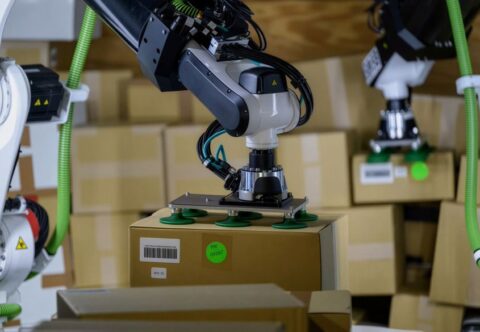
 Robots have taken over a large number of operations from humans in recent years, ranging from internal transport to packaging. Yet - contrary to what the hype around robotics might suggest - there is still a lot of human capital running around warehouses. Looze, senior researcher at TNO: "People sometimes ask whether the lights can already be switched off in warehouses. The answer to that is no. Humans are good for a wide variety of tasks and can switch quickly. Robots are not going to match this in the coming years either. It is therefore important to take humans into account if we choose to partially robotise warehouses."
Impact on physical and cognitive load
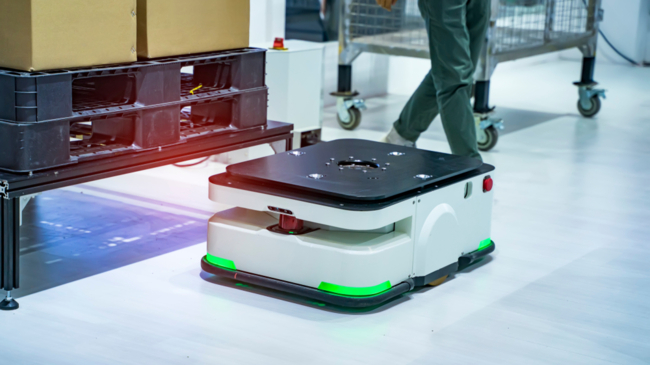
According to Looze, the impact on workload, job attractiveness and the required skills of warehouse workers should be considered. Three facets that are closely intertwined. "Take, for example, the goods-to-man systems that are popping up in many warehouses. Workers need to walk fewer kilometres as a result. Companies see this as a good development: we take good care of our employees. But the work that replaces it is often stationary: picking products and putting them in the bin. The work becomes very repetitive and that affects physical and cognitive strain."
As a manager, you can of course choose to robotise everything there is to robotise, Looze continues. "For some residual tasks, you keep some people. Probably productivity goes up, but eventually you run into a problem because the employees don't have the right skills for those residual tasks or prefer to work somewhere else because the work is too monotonous."
Taking human capital into account
TNO therefore advises companies to take a different approach, looking at the optimal deployment of humans and robots. Human capital is then taken into account in the different steps of robotisation. "If you want to continue with the current staff, consider what suits them well. What tasks can they perform so that health risks are not exceeded and the cognitive load is optimal." The psychosocial aspect should also be looked at. Who controls whom? Does the human tell the robot what to do or does the robot give tasks to the human? "The fewer freedoms employees have, the less challenging the job."
Seminar 'Man and Robot in the warehouse'
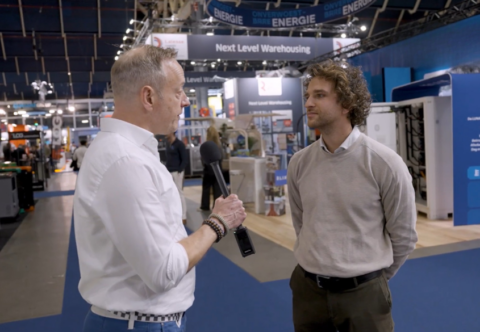
During trade fair Logistica, from 5 to 7 November in the Jaarbeurs, Looze will give the seminar 'Man and Robot in the warehouse'. During this session, he will elaborate on how companies can anticipate the consequences of robotisation for humans. An interesting lecture for anyone dealing with technology on the shop floor, both logistics managers and warehouse workers.
Register for this lecture here.