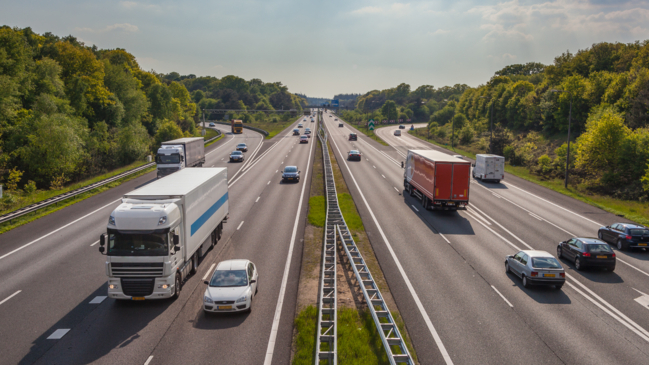
The cabinet states in the coalition agreement that the transport and logistics sector is of economic importance to the Netherlands. Transport and Logistics Netherlands (TLN) is positive about that. Only, the industry organisation has big questions about the financial translation of this importance.
TLN president Elizabeth Post says there is a lot of uncertainty about the necessary investments needed to solve bottlenecks on the road and make the sector more sustainable. The cabinet reserves 1.25 billion euros for management and maintenance of infrastructure. According to TLN, in addition, 3 billion euros are structurally needed for investments in new infrastructure. The industry organisation thinks that there is still a lot of uncertainty about how to deal with the major bottlenecks that are going to arise again and how to finance them.
Rapid construction of charging points
In addition, according to TLN, hauliers must be facilitated in the transition to zero-emission transport. For zero-emission urban logistics to succeed from 2025, the rapid construction of public and private charging points for freight traffic is essential. The government says it is committed to this, but concrete plans are still lacking. "Reinforcing the electricity grid is a precondition for the energy transition and achieving the climate goals," responds Post. " But to make the switch to zero-emission transport, transport entrepreneurs need clarity above all. They want to know where and when they can charge and competitively deploy their electric trucks. Unfortunately, it remains unclear how much the government wants to invest in sustainable equipment and charging infrastructure for the logistics sector."
Road pricing
With the introduction of road pricing, it is taking an important step towards reducing the pressure on our mobility, according to TLN. The industry association stressed that the introduction of a pay-for-use system for motorists should not come at the expense of the recycling of net revenues from the truck levy. "Those funds are desperately needed by the transport sector to make the coming years more sustainable. Clear agreements on this have already been made in the previous coalition agreement and in the climate agreement," says Post.