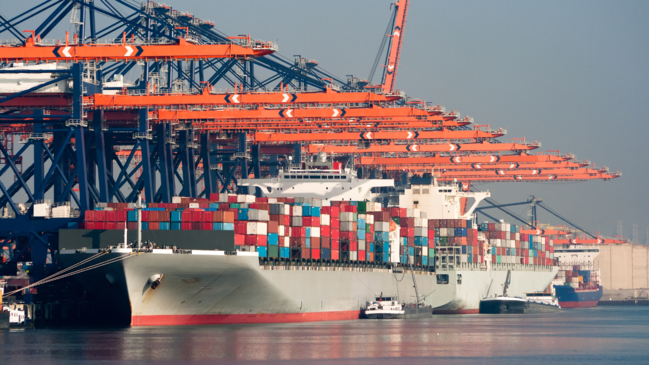
Container companies posted hefty profits in 2021. Logistics players like Maersk and Evergreen recorded combined profits of $150 billion (€133 billion), nine times more than in 2020. The record profits follow many lean years, but raise many an eyebrow.
Ocean freight rates are expected to continue peaking well into 2022, Bloomberg writes. This means: booming profits for cargo carriers worldwide, leaving smaller companies and their customers facing higher prices. Larger players like Walmart and Ikea, for example, have the scale to negotiate better deals or absorb the higher costs themselves.
For decades, container companies could not charge much for their services. That changed a few months after the outbreak of the corona crisis. The global economy rebounded earlier than expected, and ports and container companies could not keep up with the sudden increase in demand. This backlog created scarcity, with shippers currently paying seven times more for a container than at the end of 2020.
Not surprisingly, these logistics companies are currently posting high profits. Yet there is criticism. Bart Kuipers, port economist at Erasmus University Rotterdam, tells NU.nl that logistics companies performed "lousy" in 2021 and yet earned incredibly well. "That suggests that they took advantage of the situation," Kuipers said. It is even suspected that container companies are deliberately creating scarcity. For this, Kuipers refers to a Rabobank study, which states that 10 per cent of containers are - for unclear reasons - empty. "There are a lot of empty containers sailing around anyway because they have to be transported from the wrong port to the right port, but if it were true that 10 per cent of containers are deliberately left empty, that is a clear strategy to create scarcity," Kuipers says.Investigations by competition watchdogs in the EU, China, the US and the UK found no anti-competitive measures.