In many ICT implementation processes, the adage is to apply as little customisation as possible. Above all, cost and time play a leading role in this. But often customisation is more applicable and the better solution.
The first question is what you want to achieve with the ICT implementation. Is it the simplification of processes and the related efficiency improvement? Being able to offer new products or services to your customers? Improving chain cooperation or optimising your ICT structure that threatens to become unmanageable due to expansions and adjustments?
In this paper, I want to focus on achieving efficiency and effectiveness improvements, whereby the organisation positions itself better within the chain and ultimately wants to serve its customers better. This includes things like better time-to-customer, lower costs and higher reliability.
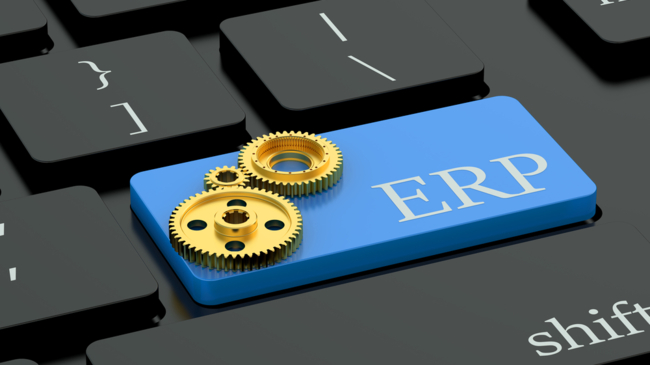
After much deliberation, your organisation decides to purchase a new ERP package that uses the latest technology, including Cloud, to manage your operational processes from end-to-end. Including a good translation to your financial administration, you draw up a complete business case together with your implementation partner. Analysis of your organisation and processes, defining objectives and implementation plan. The plan of action agrees, from the point of view of manageability, costs and uniformity throughout your organisation, to minimise customisation.
The catch is in the package. Absolutely, today's ERP packages come with a wide variety of gadgets and features. But few companies are able to get everything out of it that is in it. Is there the right thing in the package and does it match your organisation's objectives? At the end of the day, you want to serve your customers as well as possible. However, the software you purchase is not tailor-made for you, but an average package. It conforms to certain standard approaches, which are not necessarily the best for your organisation or well-suited to it.
Not infrequently, companies see their service levels drop after implementation of a standard package because the service that was previously offered, and with which your customers are familiar, suddenly becomes a lot more difficult. Your customers suddenly have to submit their requests through a dedicated portal, where before they had direct contact with your staff. Or the options in the old portal, are suddenly replaced by entirely new ones.
The 'constraint' of the package requires your business processes to be tuned to the capabilities of the package. But that does not mean that this means you will have your processes optimally aligned with your customers' wishes and requirements. On the contrary, chances are that your processes will become more distant and will be perceived as less flexible by your customers. That is the consequence of uniformity. This will not only lead to frustration among your customers but also among your employees, who will try to work around the system.
So is it really convenient to go standard? Because do the cost savings of the package, which are often much lower than in the business case, outweigh the drop in service, frustration with your customers and the workarounds (efficiency loss!) with your employees?
And how often do you switch ERP packages? Surely not every 5 years. Rather every 10 years. And after that period, it is often wiser to purchase an entirely new package. So do not stare blindly at standard packages. Customisation is also easy to manage, even with software upgrades. You will pay more for the implementation, but you will have a package that is optimally tailored to your customers and their business processes.
Hans Groen - Consultant Supply Chain and Performance Management