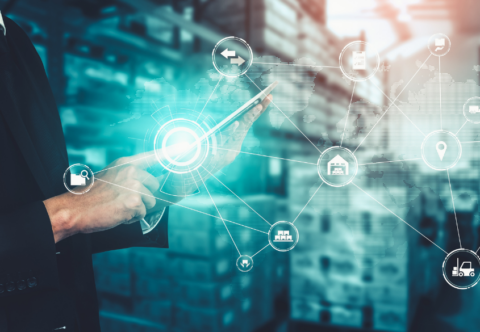
We already know a lot about the operation in our warehouses. But there is much more we don't know. Modern techniques make it possible to generate huge mountains of interesting data. All that data provides insights, even if it is often unclear beforehand what those insights will look like. That should not stop us from collecting as much data as possible.
We already have a lot of data in our warehouses. After all, today's warehouse management systems record every handling: every inbound order, every goods movement, every pick. Based on this, we can monitor the efficiency of the entire operation and measure the productivity of each employee. We can also analyse order patterns, calculate turnover rates and undoubtedly much more.
But today's techniques allow us to collect much more data. Think of indoor positioning systems, a technology that has developed greatly in the past year. Based on bluetooth beacons, active RFID tags or laser systems, it is possible to accurately determine and record the position of every forklift truck or other object. In time, this will provide, among other things, heatmaps that indicate which travel lanes are frequently used and where congestion occurs in the warehouse. Based on that information, a traffic plan can be drawn up that will help improve flow on the warehouse floor.
More data with Motion-Mining
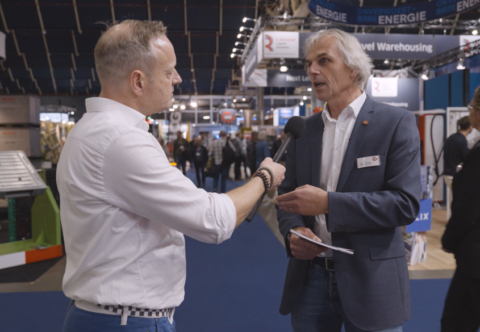
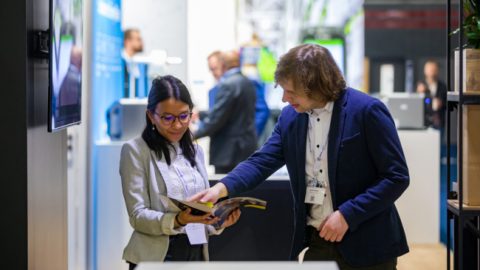
Even more data can be collected with Motion-Mining, an approach developed by the Fraunhofer Institut für Materialfluss und Logistik (Fraunhofer IML). At LogiMAT, this Dortmund-based research institute showed how order pickers and other employees can be packed with sensors. Examples include the smart watches that many people already use privately to count their steps and measure their fitness. Using that technology in logistics provides a wealth of information: How long do employees walk? How long do they stand still? How often do they have to bend or lift? What is the ambient temperature and brightness? All that data makes it possible to analyse and optimise processes, as well as improve safety and ergonomics.
Additional insights arise when we link the data with external systems. One example is fleet management systems that track, among other things, how many hours the lift and warehouse trucks have been running and how many breakdowns have occurred. Also interesting are personnel management systems, which contain information on employee age, length of service, sick leave or employment contract: permanent or flex? Is it really the case that older employees run less fast? Or do they make up for it because they lose less time at other times thanks to their knowledge and experience? Combining all that data makes it possible, for instance, to deploy employees even better on their strengths. Of course, we have to be careful with all that data. Before you know it, something like age discrimination arises.
No insight without data
Does all that data make money right away? Perhaps. In any case, they provide more insight. If I were a logistics manager, I would want all that data. I would want to know what exactly is happening on the warehouse floor. I would want to know when employees start getting tired. I would want to know if there is a directly proportional relationship between walking speed and productivity of order pickers. I would want to know at which points in the warehouse employees keep waiting for each other, so that I can eliminate those bottlenecks. So my advice: start collecting as much data as possible, even if it is still unclear what insight it will provide. In any case, without data, nobody gets insight.
Marcel te Lindert - journalist logistics & supply chain