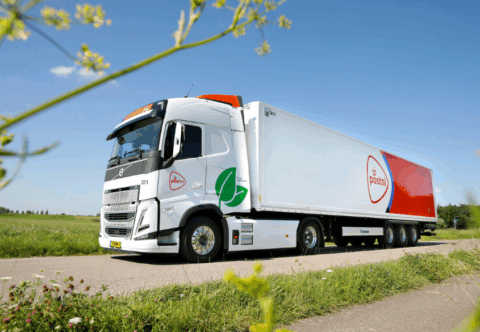
Ambitious plans of parcel delivery service Red je Pakketje, which wants to deliver completely emission-free throughout the Netherlands within three years. In doing so, the same-day delivery parcel service says it holds a global first.
Red je Pakketje, founded in 2016, now runs 120 to 150 routes daily on mainly diesel buses. "Together, these cars produce as many emissions as about 260 households. And to think that we are still under 1 per cent of the market share," writes CEO Sam Rohn on his own blog.The company, after internal research, has discovered a way in which it can deliver across the Netherlands without CO2 emissions. Rohn explains the steps the company needs to take to achieve this.
Delivery density
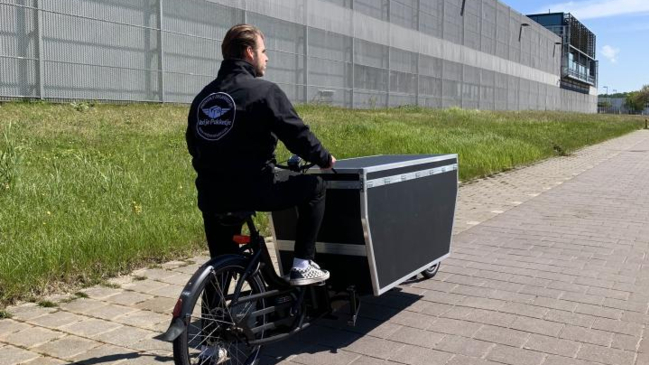
Red je Pakketje expects to replace 10 to 15 per cent of its routes with bicycle routes in the coming years. The remaining routes can be accommodated by electric or hydrogen buses. This is possible because of the increasing density of routes that Red je Pakketje travels. "If a driver has five parcels in a city, he has to deliver several cities with the same bus to make a successful route. However, if he has five parcels per street, he won't even get out of the neighbourhood."
Red je Pakketje's delivery density has already increased by 75 per cent since 2016. More drivers drive around, but they cover an average of 180 kilometres a day instead of 700 kilometres. Since the latest electric buses have a range of 150 to 250 kilometres, the routes can therefore be driven out.
Read also: 'Sustainability does not happen by itself in the logistics sector'
Network upgrade
Over the next few years, Red je Pakketje wants to convert its network to a zero-emission network. Rohn: "This means that we will not collect or deliver any parcels with a diesel bus. These buses will all be replaced by electric buses or hydrogen buses and electric bikes charged with green electricity."
Investment
The first step is securing the funding to set up the project. "Although it is also financially interesting to drive electric instead of diesel, the initial investments are huge. These are up to 2.5 times higher than for diesel vehicles."
If this hurdle is taken, the Netherlands could become the first country in the world to deliver e-commerce shipments completely CO2-free. Only for the Wadden Islands will a solution then have to be found, Rohn concludes.