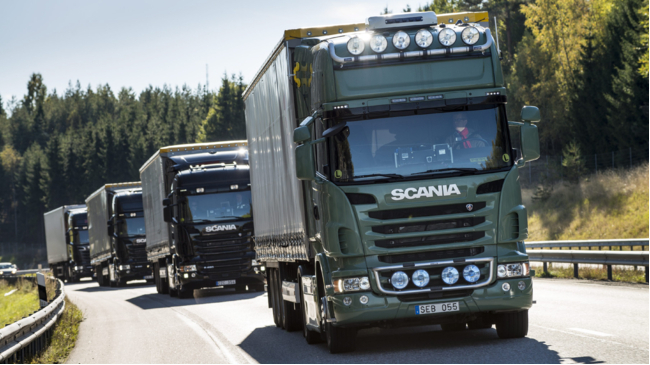
Belgium will test self-driving trucks on a pilot route from the end of March The Netherlands has been experimenting with the vehicles driving automatically for a while. The Belgians are following the Dutch example of the 'platooning principle' in which trucks drive in a column of two or three trucks.
The week-long test is an initiative of Volvo Trucks Belgium and they will form three columns of two or three trucks. In this, the front truck determines the speed and movement of the following trucks. This is possible because the vehicles are connected by GPS, radar and Wi-Fi, using 'adaptive cruise control'. The trucks follow each other's behaviour and drive independently, but there is always a driver present who can take over control if necessary.
Legislation
The test is meant to trigger discussion on legislation in the country. There is currently none. Belgians also want to see for themselves how platooning works on their own motorways. A column of autonomously driving trucks has its advantages and is generally safer for traffic. Previous European tests also showed this. This is partly because it creates a better flow on the road because the roads are better used. Which is also better for the environment.
Obstacles
Yet there are still many obstacles. In Belgium, there are many slip roads that are often very short. Other road users also have to get used to self-driving vehicles. Because of these, and other reasons, it will in all likelihood take several more years before self-driving cars are actually allowed on the road.
Editorial LogistiekProfs
Image: self-driving trucks from Scania
Always stay informed
Sign up now for the LogistiekProfs newsletter and receive the latest news, trends and offers.











