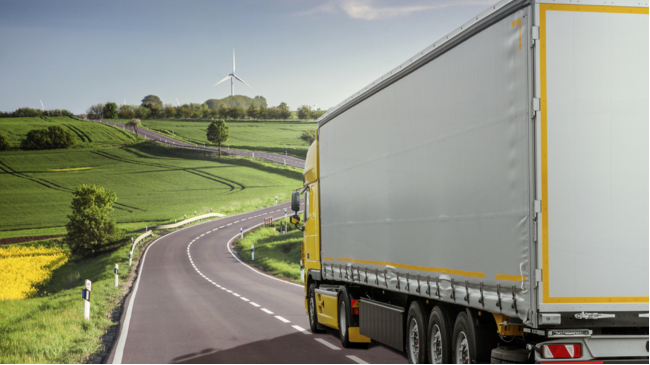
The blind spot is a nightmare for all truck drivers and many fatalities occur every year due to the driver's inability to survey the entire situation.Research shows that there is a big difference in which truck the driver is driving and how high up the driver sits.
The UK's Loughborough Design School conducted the research and found that some distribution trucks have a blind spot of up to 1.9 metres. Trucks with low-entry cabs, where the driver does not have to climb high to enter the truck, are safer than those that do. Among others, the Mercedes-Benz Econic makes use of this. These trucks are safest for cyclists and pedestrians.
Difference in brand
Remarkably, the brand in which is driven determines a lot. The study shows, for example, that the Scania P-series is significantly safer than the MAN TGS, as it has many blind spots. The MAN TGS has a total of 2.72 metres of blind spot. This is also the case for long-haul trucks and construction trucks. Here, the difference between each brand is also significant, and again, the driver sees less when he or she sits higher.
Time for action
Transport & Environment, the umbrella organisation, wants the results to be used to mandate the use of low-entry trucks in distribution work. That way, drivers will have better visibility. The European Commission agrees with the organisation, but changing the rules is not scheduled until 2028. Transport & Environment does not want to wait that long and is surprised that truck manufacturers apparently do not consider the safety of cyclists and pedestrians.
Editorial LogistiekProfs











