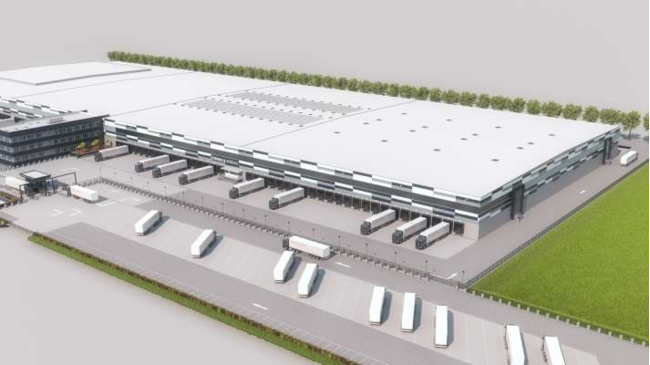
Lidl's much-discussed distribution centre in Waddinxveen has been opened. The building had already been labelled the most sustainable logistics building in the Netherlands by the Dutch Green Building Council (DGBC) before its opening. From the DC, the stocks of around a hundred Lidl stores in the Randstad region are transported.
Lidl set aside a fair amount of money for the construction of the new DC, which cost 70 million euros. For that amount, the 52 thousand square metre building is equipped with LED lighting and thermal energy storage (CHP). On the roof are 4,000 solar panels, good to supply 150 households with electricity. With these measures, Lidl needs no fossil fuels in its distribution centre and associated offices. In doing so, the German supermarket chain reduces CO2 emissions by 315 tonnes.
Lidl has also implemented sustainable measures around the distribution centre. For example, it aims to encourage staff and visitors to use sustainable transport by installing additional solar panels and charging points in the car park. The discount supermarket chain supplies 63 million litres of rainwater to local gardeners and is planting 11,000 trees, shrubs and plants. In addition to all its own sustainable activities and systems, suppliers to Lidl’s new distribution centre must also use sustainable and responsible materials that are recyclable.
Through its efforts, Lidl receives the BREAAM certificate 'Outstanding', the highest attainable certification. In doing so, it knocks Tesla off its sustainable throne. Tesla was in first place in the BREAAM ranking with a distribution centre in Tilburg.
Editorial LogistiekProfs











