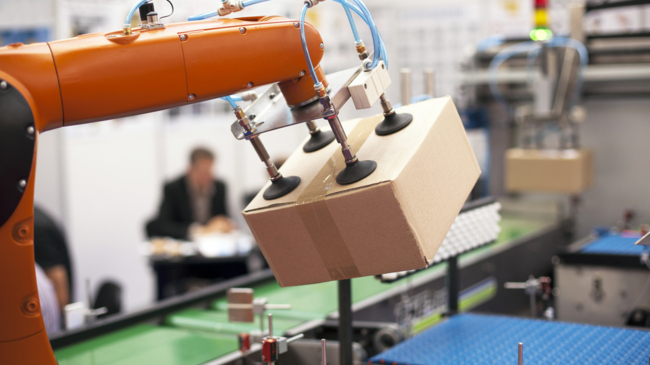
Flexible transport robots are not going to conquer logistics today. The current generation of robots is good at performing basic operations, but lacks precision and speed. This is according to the Flexible Transport Robots project of the Flemish Institute for Logistics (VIL).
The VIL tested Automated Guided Vehicles (AGVs) that navigate based on SLAM (Simultaneous Localisation and Mapping). In this process, the robot uses optical sensors to create a real-time map of the environment it is in. This allows it to determine its route and avoid obstacles. The knowledge institute thinks the technology opens doors in logistics. Indeed, the robots could also be used to assist with order picking, rather than just transporting goods. For example, a full-grobot could follow the order picker as an assistant.
The knowledge centre conducted the studies at companies such as Colruyt. An order picker from STILL was put to work at the distribution centre and a robot from Effidence was tested at Collect & Go. The tests showed that the robot had not yet fully mastered precision tasks. For instance, it did not get the pallet boxes stacked exactly on top of each other. Effidence claims that these problems can be easily remedied, for example by adding additional sensors in combination with laterally movable forks. Furthermore, the robot would move a lot slower than a manual forklift. This is largely due to the strict safety regulations applied in distribution centres.
Editorial LogistiekProfs











