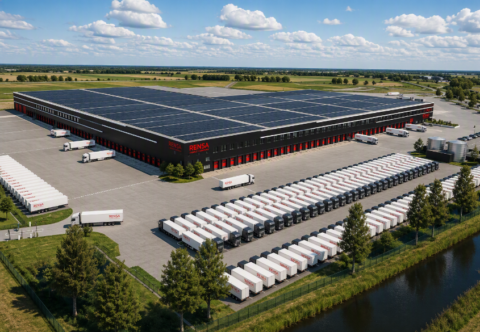
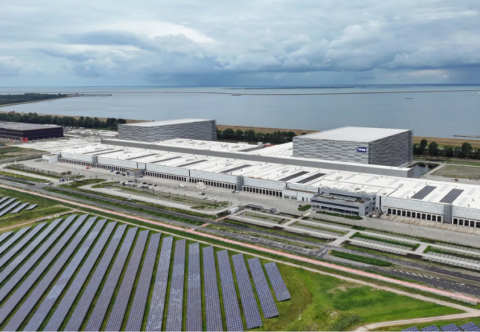
The demand for logistics real estate is changing. While rural and European distribution centres seem to be getting bigger and bigger, along the outskirts of cities the need is mainly for small, smartly positioned warehouses. Jeroen van de Kraats of City Hub speaks about this development at the Logistic Real Estate 2018 conference on Wednesday 21 February. "The logistics real estate market is focused on scaling up, we, on the contrary, are focused on scaling down."
A five-star hotel for goods. That is the description Jeroen van de Kraats likes to use for City Hub's warehouses. They are on the outskirts of Roermond, Amsterdam and soon Utrecht. The Hague and Rotterdam are in the pipeline. "Shopkeepers and hoteliers can have their goods delivered here. From there, we bring them into the city with clean transport," the City Hub co-founder explains.
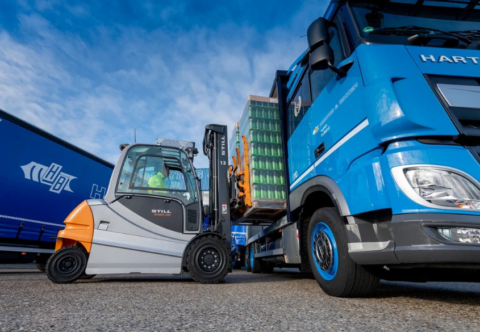
With these warehouses, City Hub offers a solution to urban distribution issues. More and more cities are closing their centres to trucks with combustion engines. The solution is to transfer goods at the edge of the city to small, electric vehicles that take care of the 'last mile'. Regularly, these kinds of initiatives run into the question of who will pay for this extra handling: the carrier that used to deliver them to the shop door or the retailer that needs the goods?
Real estate glasses
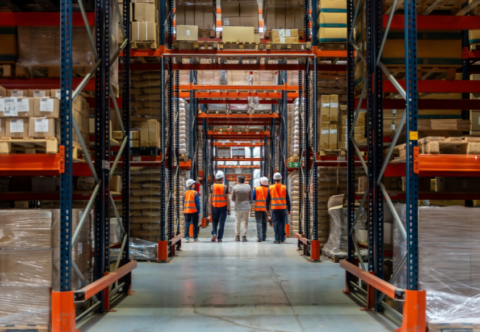
City Hub circumvents this dilemma by looking at the issue not through logistics glasses, but through real estate glasses. "Walk into any retail warehouse. The boxes are piled up to the ceiling. Often, the canteen, the shop manager's office and the corridor are also full of boxes. We offer them the opportunity to rent a compartment in our hub, where they can usually keep a larger stock. To that, they no longer have to sacrifice expensive shop space," Van de Kraats states.
Moreover, retailers in the hub have the opportunity to carry out all kinds of additional operations. "Think about unpacking, labelling or pricing items. The packaging material stays with us. On demand, we deliver the goods to the shop the same day. This allows shop staff to focus fully on the customers," says Van de Kraats, who adds that City Hub does not provide staff for all the extra handling. "But they can use a different type of employee for that. A logistics employee instead of a shop employee. In practice, that actually turns out to lead to cost savings and higher sales."
Less common property
Finding a suitable property is difficult, admits Van de Kraats. "We look for locations close to the exit of a motorway, preferably along an approach route towards the city centre. The electric cars we use are not fast and have a limited range. So the distance to the city centre should not be too great. When we find such premises, loading docks are often missing."
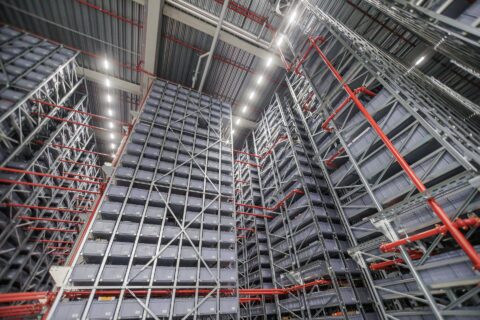
The advantage is that City Hub has less demanding requirements for a warehouse than a conventional logistics provider. "These days, the latter prefer premises with a clear height of 12 metres in order to stack pallets high. A height of four metres is sufficient for us. So we can do with less current premises. In Roermond, for instance, we are in an old bread factory, in Utrecht we are in an old steel factory. Two loading docks are enough for carriers to unload their goods quickly. That speed is important for carriers such as CB, the former Centraal Boekhuis, which is one of our customers."
Economies of scale
Van de Kraats expects more such smart warehouses to spring up around cities. City Hub is also considering opening a second warehouse around Amsterdam. "We are now in Amsterdam-Zuid, but actually we can only efficiently serve a limited part of Amsterdam from there. A location in Amsterdam-West would be welcome," says Van de Kraats, who should expect little help from the logistics property market in this regard. "That one is focused on economies of scale in logistics. We, on the other hand, are focused on scaling down. The limited number of square metres we need is not yet interesting for traditional real estate investors. That is why we are developing our own real estate solutions."
City Hub has several ideas to improve services and make better use of warehouses. Consider night deliveries where employees use smart, digital keys to put goods down in shops. The space that is still little used in the afternoon and evening could be used, for example, for web shops that need to go into town mainly in the evening. "I can imagine that in the future an additional transhipment point on the edge of the city centre would be desirable. That we use larger vehicles to take care of the first part to the city centre and smaller vehicles to take care of the last few metres. To find suitable locations for this will be entirely difficult. I see it as a task for the government to reserve such spots as part of the city infrastructure."
The Logistic Real Estate 2018 conference, organised by SPRYG Real Estate Academy, will take place on Wednesday 21 February. Besides real estate developers, real estate brokers and real estate investors, Nedcargo, Gefco and Stockspots, among others, will speak about their views on logistics real estate. For more information, visit the Logistic Real Estate 2018 website.