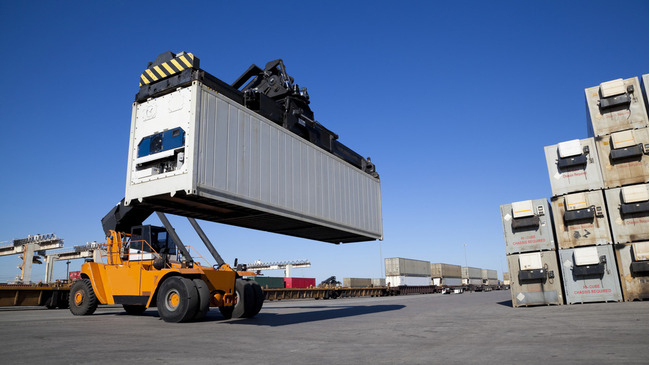
World trade suffers from shortage of ships and empty containers. As products stand still for weeks in Asia, consumers find empty shelves in shops, freight forwarders' association Fenex calls on shipping companies to quickly increase their capacity.
"There are simply too few empty containers and too few ships in service to meet current demand," said Ad Schoenmakers, chairman of the seaport logistics steering committee at Fenex and managing director of freight forwarding company Ritra Cargo Holland BV. "Products stand idle for weeks in Asia. At a transhipment port in Colombo, Sri Lanka alone, 50,000 containers are ready to be shipped, but there are no ships to transport them."
Capacity not adjusted to demand
When exports from Asia fell drastically earlier this year due to the corona crisis, shipping companies pulled many ships out of service and cancelled sailings. Although global trade is rebounding, capacity has not yet adjusted accordingly. Schoenmakers explains: "If I want to ship a container from Shanghai to Rotterdam, I used to have a place on a ship within four days. Now it takes at least three weeks. That delay disrupts the whole logistics chain, because importers don't receive their goods on time and in the end the consumer is faced with an empty shelf."
Price hike
"The shortage of sailings and empty containers has caused transport prices to skyrocket," explained Fenex president Roderick de la Houssaye. "To import a container from China, you now pay four to five times as much as last year. That has a negative impact on international trade flows and is slowing down the economic recovery."
Scaling up
Several initiatives have been taken from CLECAT, the umbrella organisation for European freight forwarders, to get shipping companies to deploy more capacity. The problem has also been raised with the European Commission. "But there seems to be no end to waiting times for the time being," De la Houssaye said. "The beginning of February is Chinese New Year. The weeks before that are always extremely busy in shipping. That will cause even more delays, resulting in empty shelves. We need to get back to a reliable and predictable timetable as soon as possible and call on shipping companies to scale up as soon as possible."











