On the outskirts of cities, logistics hubs are springing up like mushrooms. Besides the more traditional hubs used for specific goods flows such as construction and parcels, many new initiatives are emerging that serve multiple types of goods flows.
So writes Buck Consultants International (BCI) based on an analysis of current hub initiatives. The consultancy and research firm sees logistics hubs as a solution to overcrowded cities that are difficult to supply.
There is more attention in the market for hubs on the outskirts of cities. Logistics service providers in the parcel market already operate from city hubs. In addition, end users are working to optimise urban distribution through bundling projects. Recently, there has been more attention from the market to deploy a hub, to be operated by third parties. BCI investigated what has been achieved so far with all these initiatives.
Size of city hubs
In the past, there was a lot of ambiguity about the size of a hub in (required) square metres and characteristics, according to BCI. In some cases, city hubs are associated with large-scale distribution centres located along the Netherlands' main transport axes and intermodal hubs. However, an urban hub can have a different size and function. Based on the Urban Space Model, Buck Consultants International has classified the size and characteristics of the various types of hubs:

In 2019, a lot of research has been carried out on setting up and designing hubs, including by the Top Sector Logistics and the Universities of Applied Sciences of Arnhem, Amsterdam and Rotterdam. These studies show that especially in the categories of city-regional DCs (category 2) and city DCs (category 3), many projects have been realised or are in the pipeline.
No combination of target groups
The buildings realised so far are relatively on the small side (< 5,000 square metres). In part, this is because the initiatives were intended to build up experience and experiment. They are relatively small but also single-storey buildings, where the combination of target groups has not yet taken off. Often, these city DCs focus on specific target groups, especially from the construction, food or parcel delivery sectors. This also applies to the new initiatives in this segment. So cities may soon end up with multiple city hubs or, in some cases, a combined city hub.
City-regional DCs on the rise
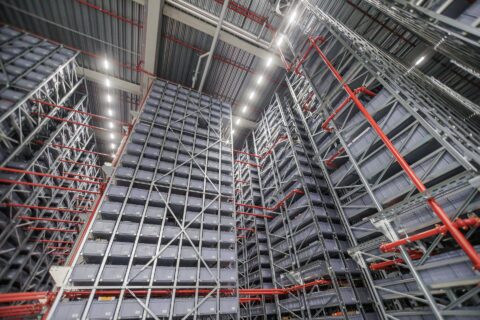
'New and interesting', BCI calls the initiatives in category 2, city-regional distribution centres. These properties have an area of more than 10,000 square metres, are multi-storey and often intended for multiple types of goods flows. These distribution centres do not yet exist, but are coming onto the market soon, according to the initiators. Examples include the Amsterdam Logistics Centre, the Dutch City Logistics Campus in Lijnden (both in the Amsterdam Metropolitan Region) and the City Logistics initiative (multiple hubs).
A feature of these initiatives is that in addition to logistics optimisation, building optimisation (in terms of investment value) is central:
- Some scale (>20,000 square metres, in multiple layers).
- Based on cooperation between real estate parties and end users.
- Interesting for multiple types of target groups.
- Developing multiple functionalities with differentiated returns.
- Hybrid development, this means also looking at the reuse of premises if parts of the functions disappear or take a different form.
Within the Netherlands, large-scale projects are initially concentrated around the big cities. Not surprising, BCI believes, given the degree of nuisance experienced and, conversely, the mass that can be created to run a profitable logistics operation.
Combinations of functions can emerge in large-scale distribution centres, benefiting property values. This could include combinations of transport with, for example, storage, but also office space, innovation space, meeting facilities, a hotel, new circular functions and a roof where solar panels can be parked or urban agriculture can take place, BCI concludes.
Image: City Hub in Utrecht, where goods from different distributors are bundled and transported to Utrecht city centre by electric trolleys.