Dutch e-commerce warriors have had turbulent years, and most players are still experiencing significant growth. Successful players such as CoolBlue, Amazon and Wehkamp have been able to demonstrate in the past that this growth comes largely from innovation in marketing concepts, customer focus, and especially organising logistics in an innovative way.
Over the next few years, we will certainly still see substantial growth in e-commerce. But what if the penetration rate of traditional online retail is reached in the coming decades? Anyone who wants an answer to this should -as always- just look to the past. The history of early e-commerce has two main phases:
1. Introduction: Everyone can merrily sell over the internet, and primary product and assortment differentiation ensures sufficient differentiation between players.
2. Consolidation: The previously mentioned point no longer applies and consumers buy from the cheapest party.
Going through this dynamic has brought us to the following point today: There are big players who can create huge economies of scale. This ensures that the price difference between these larger players is minimal. So are we going to see the same phenomenon again? Probably not. In fact, recent studies show that price plays an increasingly smaller role in online purchases.
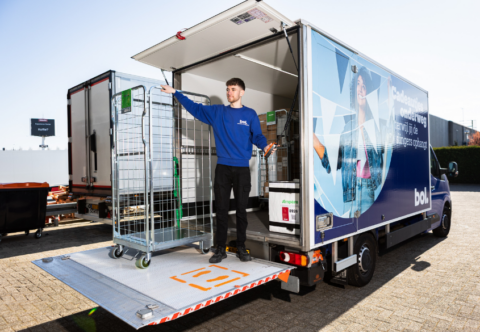
However, anyone looking closely at the sector sees similar dynamics to those of the past: Major players now threaten competitors not by their prices, but by an expansion in service. For example, in the field of logistics services. Bol.com recently launched 2-hour delivery in Amsterdam, and CoolBlueFietst works similarly. However, these are not realistic concepts for the average clicks & bricks retailer. Certainly not if such a retailer wants to offer comparable solutions on its own. Again, this has to do with economies of scale, this time, however, for the online retailer's internal cost calculation. For a large player, the two euros more for immediate delivery make little difference. If the smaller player has to spend a multiple on a similar service because of lower coverage and volumes, this is of course a margin killer. So what needs to be done to prevent this development? Two things:
More collaboration between online retailers
At Fontys, we do a lot of research together with online retailers. Conversations are therefore about competitive strategies. This shows that most webshops are not interested in cooperating if this could potentially lead to an (equally large) advantage for allies. The motto is literally "rather do nothing than grant someone else the same thing".
If we look across borders, we do see a number of examples where parties have sustainably strengthened their growth through partnerships. Zalando, for example, collaborated with Notebooksbilliger.de in its early years and built its own sameday network this way. A real logistics revolution at the time.
Partnerships like this one hardly seem to be an option in the Netherlands. Why? Any form of business presupposes risks, usually in the form of investments. One naturally wants to keep these risks as small as possible. At the same time, one wants to remain in control in case a particular venture becomes successful. This is an extremely tricky combination within any collaboration. Who bears the risk, and what are the consequences in case of success or failure of the venture? Companies therefore often have an all-or-nothing attitude when it comes to these ventures. Either they undertake alone and the risk is bearable, or they enter into a loose partnership with few or no obligations so that they remain flexible at all times. A level-playing-field does not exist in these partnerships.
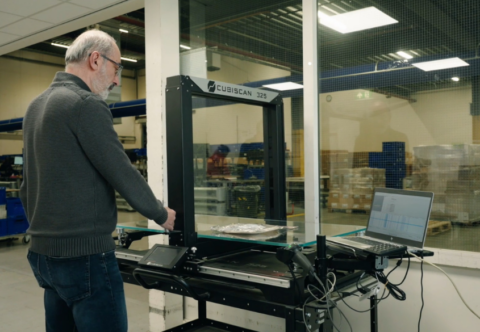
We see a concrete example for this way of thinking in developments that will become increasingly important in the coming years, but which cannot be picked up by small players alone. One example is packaging optimisation. Customised packaging solutions such as Neopost's CVP-500 can be found in bulk quantities at the Bols of this world. Even at major retail brands like Blokker, 20 per cent fewer trailers leave the premises each day. Consumers appreciate such an investment because of less waste and a more sustainable transport process. In addition, online shops save on personnel costs, packaging materials, padding and storage space. To justify an investment in these machines, they need to send 250 to 300 thousand parcels a year. So solutions like these do remain a hefty investment for the majority of retailers, especially if the aforementioned order numbers cannot be handled by one party.
However, research by the Fontys Hogeschool Techniek en Logistiek in collaboration with the University of Plymouth (UK) was able to show that a centralised packaging process of multiple retailers with their own warehouse operation in the same region can be profitable. On the one hand, additional costs arise for transporting unpacked products to a packaging and shipping location (e.g. in bins or the primary product packaging). On the other hand, several users can then save on the above-mentioned costs. There are even more savings to be made: with a joint volume contract with the carrier, shipping costs for all these users are lower than if each party had its own contract.
Collaboration between retailers and carriers
Vertical cooperation is also apparently lacking in online retail. Retailers complain about strict and inflexible parcel carriers with excessively high rates and little ambition for cooperation. This is due to a number of circumstances: On the one hand, minimal price differences among carriers still lead to more volume, and so carriers are directly incentivised in this. On the other hand, they are constantly working on capacity expansions and, according to their own statement, can invest less in alternative delivery options; new technologies and cooperation concepts. This is demonstrable by a decline in carriers' effective profit margins in recent years.
Packaging optimisation can also lead to benefits for both parties at this level: Namely, the carrier saves if the retailer delivers smaller parcels. Calculations show that (for both parties combined) for a volume reduction of 20 per cent, there are savings of around 0.10€ on a parcel. This is due to fewer collection trips and inter-hub transports between sorting centres, and thus better utilisation of available capacities in the parcel network.
In current practice, online retailers are charged by kilograms or numbers. So there is no direct incentive for retailers to reduce parcel volume. This is because they do not have a good idea of the financial business case around this. Carriers stress, however, that rates do get determined based on average weight and volume, however, a fixed and clear calculation methodology is not their objective. According to carriers, the reason for this is the retailer. The latter can no longer easily predict its shipping costs, for instance in case of changes in the range or packaging materials.
So in this case, too, the finger is pointed at each other, and people are more focused on short-term gain than long-term gain.
And now?
Now we have to start wondering what this kind of behaviour will bring in the long run, regardless of growth and regardless of the constant euphoria in online retail. We now know from surveys that more than 50 per cent of all parcel shipments in online retail come from 10 online players.
If we want monopolistic online retail in the future, where the top five players control more than 80 per cent of the volumes, then we should definitely just carry on as we are now. Alternatively, we can opt for a diverse landscape where small players do as well as the big players through honest collaboration. A landscape where every startup can hook up with innovative concepts and services, and where the average shop is supported in expanding attractive services by other fellow competitors.
In online retail, we like to shout "ultimately the customer decides". Nice and easy, right? In the end, retailers mostly decide for themselves. Do they partner with peers who might overlap with their own objectives, or do they isolate themselves both in the positive and negative sense of the word? Looking at the past, we see that this has always been the wrong conclusion so far. And yet most of the parties are doing this.
Now we are again waiting for another player to make the first move. On its own. We say that two-hour delivery makes no sense because consumers don't demand it, until widely proven otherwise, and try to do something with no risk anyway. Something that gives no benefit to another. Something we have control over ourselves. We wait for the market to regulate itself. So who is to say that e-commerce was created by risk-taking and risky investments....
 Ken Zschocke is a lecturer in Logistics and Supply Chain Management at the Fontys Hogeschool Techniek en Logistiek Venlo.