Due to corona, logistics flows have been disrupted in 2020. However, after the first few months, recovery was swift. Large differences can be seen within the industry: inland shipping, event logistics and catering supplies experienced a tough year, while road freight transport recorded a decent increase in profits at the end of 2020.
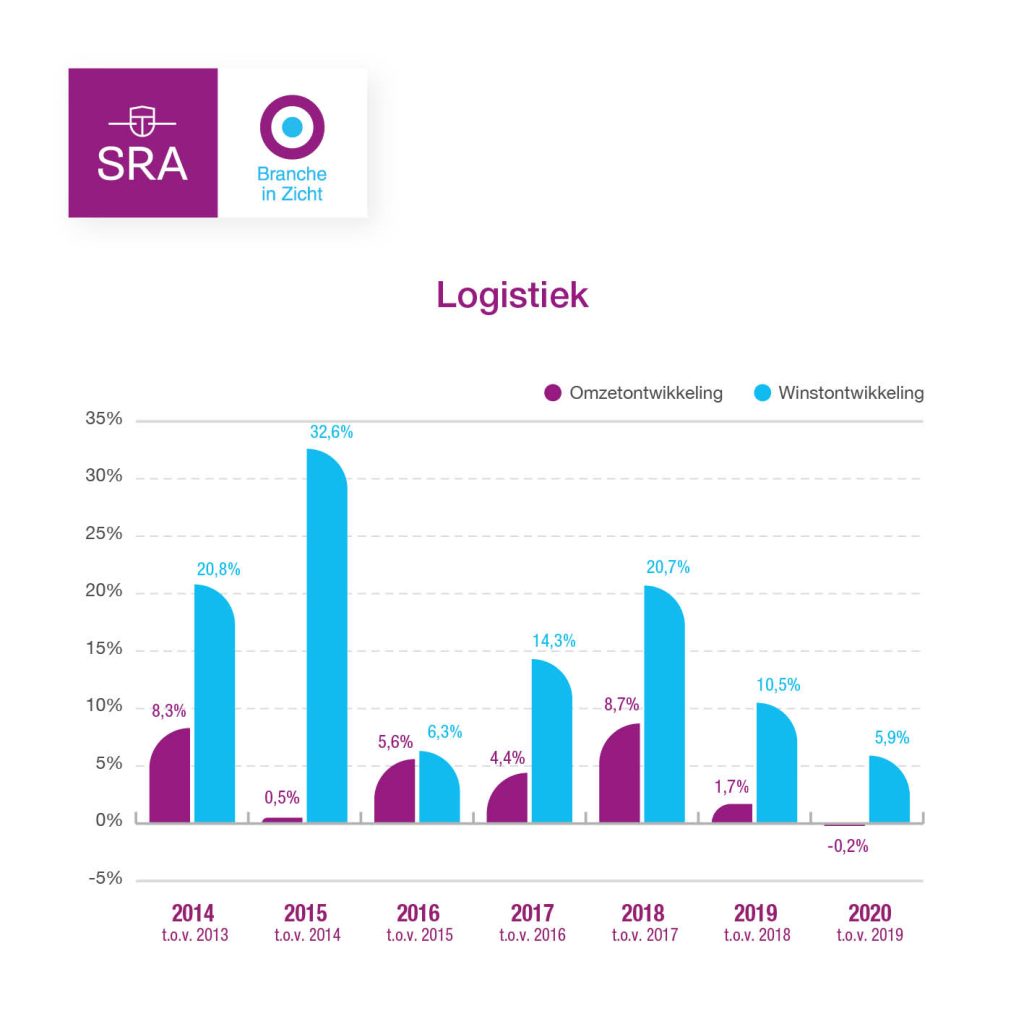
This can be read in the SRA report 'Branches in View 2021. For the whole of 2020, turnover in logistics fell by 0.2 per cent, while overall SMEs (all sectors) showed modest growth. The ordinary result before tax was 5.9 per cent higher, while SMEs as a whole reported an increase of 9 per cent.
That difference compared to the SME average is not unique: looking at the trend over several years, it is noticeable that revenue increases are lower than the SME average every year and that profit percentages fluctuate. In 2015 and 2018, the industry recorded above-average profit growth, while in other years profit growth was actually lower than the SME average.
Inland shipping continues to lag behind
Inland shipping lagged behind the average in terms of turnover in 2020. Besides the impact of corona, energy transients (less demand for coal) and volume decline due to low water also played a role. Inland shipping did benefit from construction supply and tanker shipping. Road freight transport showed the strongest recovery last year. Turnover rose slightly, and profits in particular were high.
Finance
Companies' financial position has improved slightly, although here too the sector lags behind the SME average. The percentage of companies able to meet financial obligations stands at 82 per cent. The report notes that the differences within the industry are also significant in this area.
Operating costs in logistics fell by almost 4 per cent on balance. Personnel costs in particular decreased (-3 per cent), where previous years had seen a considerable increase. This could be explained by the NOW scheme, which was deducted from this item. Labour costs also decreased by 4.1 per cent. Companies had to use the flexible shell less often and work overtime less often.
Springboard to intensified cooperation
Across the industry, price pressure is unprecedented, resulting in minimal margins. Collaboration and optimisation are therefore 'a must'. The report quotes Bart Banning, sector economist at ABN Amro: "I feel that parties in the chain were much more at each other's mercy due to the corona crisis, because they were all facing the same problems at the same time. Let this be a springboard to more intensive chain cooperation that people have been talking about for years."