The logistics labour market is in full swing. In the long term, robotisation and automation threaten to reduce the need for lower-skilled employees, but these developments are slower than thought. Social innovation is necessary to keep work interesting for these people. At the same time, the demand for logistics specialists at college and university level is rising due to the increasing complexity in supply chains. New initiatives such as the LSCM classification system are making the profession more interesting for talent at this level. The Logistica trade fair from 28 to 30 November pays a lot of attention to developments in the logistics labour market in the form of knowledge sessions.
According to 2015 figures, an estimated 890,000 people work in logistics. Some 305,000 people, 34 per cent of the total, hold higher-level logistics positions such as manager or planner. That number will grow by an average of 4 per cent a year to 340,000 people in 2020, according to research firm Panteia. It won't stop there. "In five to ten years, there will be a substantial shortage of higher logistics graduates, especially at college and university level," says Peter van der Meij, who sits on the Human Capital Table Logistics as a member of the Logistics Top Team.
Van der Meij points to the politically and economically turbulent times we live in. "If there is unrest in Cairo's Tahir Square, it has an impact on the availability of the Suez Canal. If oil prices rise, it affects companies' procurement strategies. The level of abstraction in logistics is rising. That calls for college graduates with new competences in planning, chain management and ICT." Jack van der Veen also sees an increasing need for new competences. "Analytical and problem-solving skills remain important, of course. There is also a need for people who can think horizontally: working together in the chain with increasing customer value as the goal."
'Technological innovation is too slow'
A shortage of logistics workers is also emerging at vmbo level. Interest groups such as TLN are taking measures to prevent a driver shortage. In warehouses, we can draw on large pools of Eastern European employees for the time being. The general expectation is that many jobs in warehouses will eventually be filled by robotisation and automation. However, these developments are not moving very fast, warns Steven Dhondt. "Too slow in any case to move the sector forward quickly," argues the TNO scientist, who is part of the social innovation working group of the Human Capital Table on Logistics.
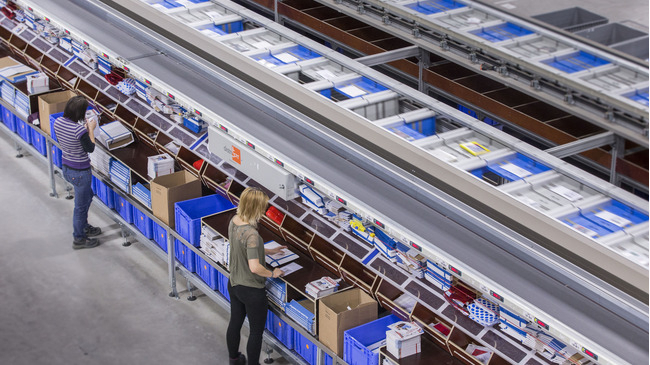
Dhondt refers to Panteia's research, which shows that the demand for logistics employees at vmbo level remains high. "Automation in logistics often involves small technologies, think of the use of smart glasses or pick & place robots for order picking. These may result in more efficient sub-processes, but do not yet lead to a massive outflow of people from our warehouses. Indeed, we are currently seeing a rising demand for logistics staff again."
Social innovation
By small technologies, Dhondt refers to innovations such as smart glasses and exoskeletons that support logistics workers, but do not make them redundant. "The same applies to the planning support software available on the market. These offer progress, but do not suddenly put an entire planning department out of work. Additional social innovation is needed to realise impact with these kinds of innovations," Dhondt says, complemented by Van der Meij. "Automation requires different competences among supervisors. They will need to have a greater understanding of processes to be able to deploy people and robots optimally, for example. They will have to be able to supervise change processes," Van der Meij says.
Social innovation is also needed to keep work at the lowest level of education interesting. According to Dhondt, with the help of ICT systems, many interesting tasks have been placed with people with an MBO-3 or 4 education in recent years. They determine which tasks should be performed in which order on the warehouse floor, which has made the work on the floor more boring. "At the same time, the complexity of operations is rising and risks are increasing. If something goes wrong, it goes wrong right away. At such times, employees perform a crucial function. By giving them training, more challenge, more variety and more responsibility, we keep them motivated."
Image enhancement and knowledge development
The Top Sector Logistics is also tackling the impending shortage of employees at college and university level. A better image of the profession should increase the inflow of new talents and the lateral inflow of talents from other fields. Social innovation must contribute to capturing and retaining these talents in the sector. Knowledge development also contributes to this. "Universities of applied sciences play an important role in bringing knowledge to SMEs. This increases professionalism in the business sector and strengthens its image, but also provides more internships," says Van der Meij.
The quality of education is of great importance to face future logistics challenges. This means that educational institutions must also constantly innovate. "We cannot be training our young people now for jobs that will no longer exist in 10 years' time," Van der Meij said. "In addition, we need to improve the flow from MBO to HBO courses. Many people who choose this continuous learning path do not make it to the finish line. The gap between MBO and HBO courses is too big for that. We have capitalised on this with an abbreviated, two-year hbo programme that is awarded a recognised degree in higher vocational education: the associate degree."
Earning points for LSCM
During Logistica, the Logistics Management Association (vLm) is turning the spotlight on another initiative to strengthen the profession: the LSCM classification system. Every logistics and supply chain professional, after being included in a register based on education and work experience, is classified at a level designated LSCM start, 1, 2, 3 or 4. If they want to maintain or improve their classification, they must continue to develop by attending studies, training courses, conferences, symposiums and seminars. Also during Logistica, they can earn continuing education (PE) points by participating in knowledge sessions and tours.
According to vLm chairman Van der Veen, the LSCM classification system also creates clarity for young talents in the field. "They can now map out their career path. The system shows what knowledge they need to brush up on to improve their classification. It also creates clarity for lateralentrants from other fields such as procurement and marketing. They are already familiar with this course of action," said Van der Veen, referring to the NEVI and NIMA classification for purchasing and marketing, respectively.
'Lifelong learning'
Especially as the logistics profession changes and new competences are demanded, a classification system is of great value. "It is a stick for everyone to acquire new knowledge and competences. Lifelong learning is also essential in logistics. It is becoming increasingly important for people to develop not only within their company, but also within the wider profession. That is good for their own employability," says Van der Veen, who explains the classification system in a knowledge session during Logistica
The entire logistics sector including the Top Team Logistics and the interest groups TLN and evofenedex have backed the vLm's initiative for this classification system. Also
Van der Meij is an ardent advocate. "It is crucial that logistics professionals continue to develop, understand the dynamics in the sector and keep abreast of the latest developments. As in other fields, the classification system makes it clear that someone is demonstrably a professional. It is thus a great tool to improve the professionalism of the entire sector. This strengthens the image and makes our field more attractive to lateral entrants."
Logistica
Logistica is the most important trade fair in the field of logistics and goods flow management within the Benelux. Besides a large and comprehensive range of exhibitors, Logistica also has an extensive content programme with conferences, seminars, demonstrations and informative tours. This edition of the exhibition has no fewer than 4 Scala's, each covering 1 of the focus areas Move, Store, Pick and Deliver. More information can be found at www.logistica-online.nl. Tweet along via #logistica2017. You can register for Logistica here.
ICT & Logistiek www.ict-en-logistiek.nl, the annual trade fair for ICT applications and services in the logistics chain, takes place simultaneously with Logistica. Information on logistics developments can be found throughout the year via Logistiekprofs.nl.











