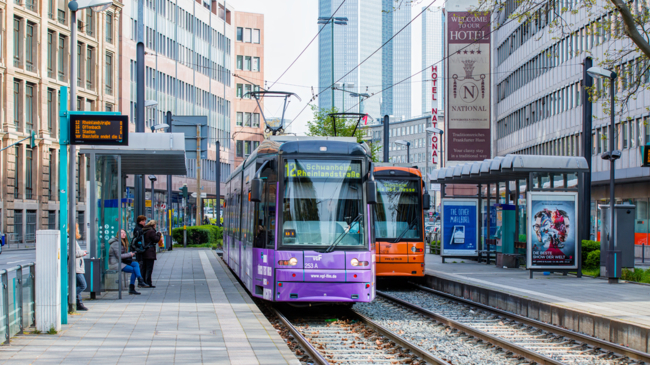
Parcels could potentially be delivered by tram in inner cities. That option is not necessarily cheaper, but more effective and sustainable than other delivery options, including the metro. In Amsterdam, the freight tram was tested more than 12 years ago.
Researchers at Frankfurt University of Applied Sciences are currently examining the advantages and disadvantages of the freight tram. German transport minister Andreas Scheuer previously suggested that parcel delivery by metro could possibly provide relief in busy city centres. From small hubs at metro stations, parcels could be collected or brought to the front door by cargo bike.
Researchers at the University of Applied Sciences see more merit in urban distribution by tram. That would be more effective than delivery by metro, at least in Frankfurt, where the tram network has considerably more stops and offers more convenience than a tunnel system.
More expensive but cleaner
There are also disadvantages compared to regular delivery methods. The freight tram is slower and costs more than delivery by van. Delivery by tram costs 1.89 euros per parcel. For a van, it is 1.62 euros. However, the tram concept is ahead in terms of CO2 savings. According to the researchers, the freight tram can save up to 57 per cent CO2 emissions daily.
Cargo tram trial in Amsterdam
A trial of a freight tram was already held in Amsterdam in 2007, an initiative of CityCargo Amsterdam. The aim was to eventually run 53 freight trams in Amsterdam. A year after the first two freight trams were introduced in Amsterdam, CityCargo threw in the towel after no consensus was reached on costs, and CityCargo filed for bankruptcy at the end of 2008.
Image: Tram Frankfurt, muratart / Shutterstock.com











