By applying new technologies, supply chains can make a greater contribution to solving societal issues such as the energy transition, the ageing population and future food supply. That is the conclusion of the Supply Chain Excellence Leadership Platform (SCELP) at its meeting on 14 May. During the discussions between SCELP members and experts such as Jos van Hillegersberg (University of Twente) and Gerwin Zomer (TNO), it emerged that this should also pay sufficient attention to processes and to the people using the technologies.
How can we sustainably feed 10 billion people by 2050? That is one of the biggest issues in the coming decades, the answer to which must largely come from the highly complex food supply chain. The EAT-Lancet Commission mapped out what that answer must consist of: less use of natural resources, less waste of food and a shift to healthier diets that include less meat. "To achieve that goal, we as supply chain professionals will have to pull out all the stops. We will have to use our complete toolbox," states Marc Vogels, VP Logistics at Enza Zaden, on behalf of SCELP's Digitalisation working group.
Mission-oriented innovation
Invited by the Digitalisation Working Group, Gerwin Zomer explains TNO's approach to these kinds of complex issues: mission-oriented innovation. "This approach is hot in the policy world. It often involves socially relevant challenges involving many stakeholders," explains the TNO senior business consultant. "It is unknown what the road to the final goal looks like, but still we take a first step. In doing so, we build skills and create agility. This is how we increase the room for manoeuvre in the future," Zomer argues. "Technology is rarely a problem here, we see enough progress in that. There are, however, issues that stand in the way of technology adoption. Then it's about people's behaviour or legislation, for example."
Start with the business question
That technology is often not the problem also concludes Jos van Hillegersberg, professor of business information systems at the University of Twente. He talks about the possibilities of artificial intelligence and machine learning in the supply chain. "We are caught up in a hype. Large data science teams are being built within many companies. It is certainly important to master the technology. But sometimes we forget what the business question is that those teams need to answer. We still see few concrete business cases from companies that have actually improved their supply chains with big data and artificial intelligence."
Van Hillegersberg advises to always start big data projects with the business question: What do you want to improve? Who lies awake for that? Then other questions come into play: what techniques are needed, what data are available? Finally, it is a matter of identifying the necessary changes and challenges. "The most interesting results arise from combining data from different sources. But that raises questions: who then owns that data?"
Trust needed
SCELP members discussed how three companies from one supply chain could increase the availability of their products by combining and analysing their data, based on a case study. Who should be in charge? And what agreements should be made? Trust remains a tricky issue here. This cannot be solved with technology; it requires attention to processes and behaviour, was the widely supported conclusion.
'Stretching our minds'
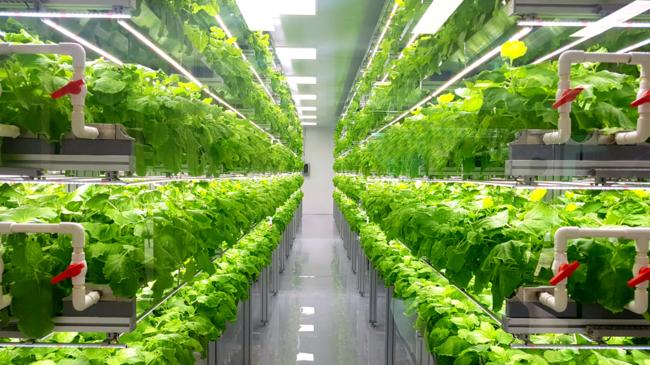
This is also stated by Jack van der Veen in his closing remarks. The professor of supply chain management at Nyenrode Business University harks back to the food issue. "The temptation is great to look for the solution in new technologies such as vertical farming or genetic modification. But technology is not the limiting factor, it is mainly about how we deal with it. People are relatively slow in adopting available IT, according to research by Warwick University: only 13 per cent of companies are in the higher maturity segment when it comes to digitisation. In addition, companies still find it very exciting to share data, even though this is an important key. Finally, it remains a challenge in many companies to let go of silo thinking and start from processes."
The working group cited the food issue to excite SCELP participants. What steps can we take now to feed 10 billion people in 30 years' time? 'Stretching our minds', the working group calls it. "The EAT-Lancet Commission argues that disruptive technologies are needed to achieve that seemingly impossible goal. We want to take the necessary first steps with SCELP," Vogels states. Tonight, at least, it has become clear that those steps lie not only in the technology itself, but also in creating the framework conditions to make good use of those technologies.











