Increasingly from natural causes but also from human failure, supply chains are under threat. Fukushima or the natural disaster in Thailand are reasons to think about the length of your supply chain.
Not only natural causes, such as climate change, can seriously threaten your supply chain. The financial crisis also shows that small events can end up in major disruptions. Who would have foreseen that Lehman's insolvency eventually toppled dominoes worldwide.
Driven by Cost Leadership, the length of supply chains has only become longer in recent decades. Driven by Cost Leadership, much was outsourced within the supply chain up to 7 tiers. But how reliable and controllable is your supply chain then?
Those 7 tier are often small production facilities in countries like Thailand, China or Indonesia. Communication is difficult, language and cultural differences continuously play a delaying role and add unnecessary complexity to your supply chain. Real-time information on, for instance, planning attainment is hard to come by. The latter puts ratios on edge when it comes to on-time delivery to your customers. The effect is that one more companies maintain a much larger safety stock in their supply chain, than strictly necessary. Which, of course, is a solid contradiction with lean supply chains.
From a cost perspective, it might still be expedient to maintain such a long chain but have you considered the risks? The risk of disruption, higher inventory and lower delivery levels. It is often difficult to carry out these kinds of calculations, so companies prefer to shy away from this. It is only when disaster strikes and you are faced with the consequences that the emergency brake is pulled.
I would advise companies to dive into this anyway with a dedicated risk team. To write the right business case that not only looks at directly traceable costs, but also properly quantifies the costs of [un]reliability, the effects of more inventory and lower service levels. Then, just like that, the outcome would be that shortening your supply chain offers significant benefits. Not for nothing has a backsourcing trend emerged in recent years, particularly in the United States.
Other benefits of a shorter supply chain are that you will again do business with suppliers you know inside out. With whom you can build a solid and transparent long-term relationship. Real-time information becomes much easier, supply chain integration and cloud solutions quickly come within reach. In addition, in the event of an unexpected disaster, it is a lot easier and cheaper to have your supply chain restored quickly (resilience).
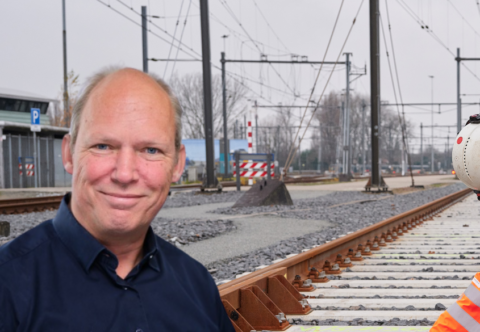
Hans Groen - Consultant Supply Chain and Performance Management
Stay up to date
Sign up for the newsletter and receive the latest news, trends, innovations and developments from the sector.