The e-commerce sector is working hard to reduce air in parcels. However, a lot of air is also transported at other places in the chain, argues Herman Wagter of partnership Connekt.
Connekt, a non-profit organisation working on innovation in logistics, together with Thuiswinkel.org, conducted research on packaging density in the chain. Major players such as bol.com and Coolblue are already in the process of replacing large boxes for custom-made packaging. As a result, packaging takes up less space, leading to more efficient transport and ultimately fewer emissions.
Besides air in parcels, there is also a lot of air in the logistics process itself, argues Wagter at Webwinkel Vakdagen. "The space is sometimes in a different corner than you think." For example, rolling containers, trucks and delivery vans are not always optimally loaded. Thirteen transport companies and logistics service providers gave Thuiswinkel.org and Connekt a look behind the scenes, to gain insight into whether logistics resources are used optimally.
Roll containers: little air

Working with roll containers is ergonomically convenient for warehouse workers, argues Wagter. "One can easily fill the roll container and the truck can be loaded quickly and neatly." Wagter observes that almost all parties already strive for maximum loading of roll containers. "This is done quite cleverly, according to our spot checks. This is therefore where we believe there is little improvement to be made."
Trucks: a lot of air
Trucks are still largely loaded with air. This is precisely because of the roll containers, says Wagter. The roll containers are placed as efficiently as possible, but because of the limited height and the wheels under the roll container, there is still a lot of space above and below the container for parcels. "As a result, about 30 to 40 per cent of trucks are loaded with air. So there is room for improvement here."
Delivery vans: lots of air, little time
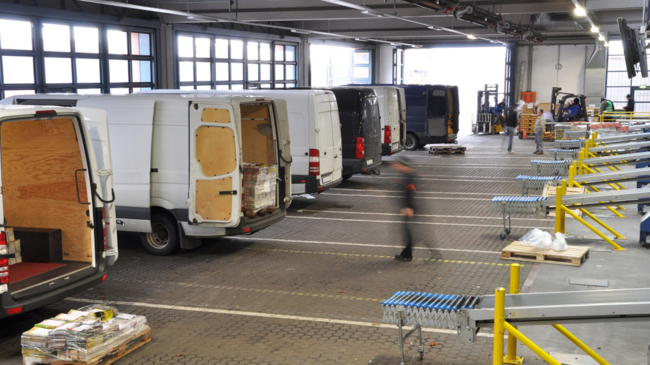
Delivery vans are also not optimally loaded. This is partly because drivers load the parcels themselves. "Our sample showed that one driver loads the van as full as possible, while another driver creates a walkway in the middle," he says. However, the bottleneck is not in loading, but in time. The driver can load his bus fuller, but does not have enough time to deliver more parcels. The day is already full."
Alternatives
In a follow-up study, Connekt and Thuiswinkel.org want to investigate the alternatives available. This will look at other load carriers, such as higher roll containers or nets. And how efficient are roller conveyors, where parcels go directly from the van into the sorting process? Wagter: "Those solutions can ensure fuller trolleys."
"We notice that companies are looking a lot for the optimum: how do I use the space and still be as fast as possible? However, the mandatory CO2 reduction is getting higher and higher on the agenda. We need to transport more with substantially fewer emissions. For that, companies really have to do their best."
Webwinkel Vakdagen
Tomorrow, on Thursday 24 January, the second day of the Webwinkel Vakdagen takes place. You will find 270 exhibitors in the home shopping industry and get inspiration from over a hundred lectures and keynotes. You can register for the Webwinkel Vakdagen here.











