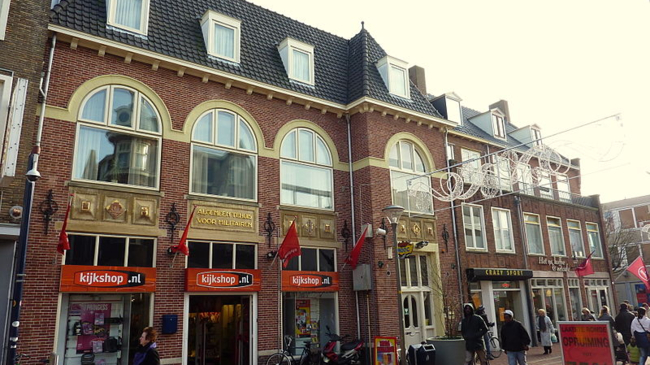
Kijkshop aims to operate at the highest level in e-commerce. The company
achieves this by having its shops function as mini-distribution centres; a
strategy that was, in fact, already laid out by the retailer’s ‘look-choose-ready’ model
.
During Webwinkel Vakdagen in the Jaarbeurs, e-commerce manager Jeroen van de Wiel explained that the showcase model has given Kijkshop many advantages in its transition to omnichannel. In the shops of Kijkshop, things had been the same as in the average web shop for years: the customer places an order, the shopkeeper picks the order and then delivers it. For online orders, since the opening of the shop in 1999, things were different. For years, these orders were delivered from the retailer's two large distribution centres. This caused problems here and there, says Van de Wiel. For instance, it took five days to get items from the shop back to the distribution centre, only to have it delivered.
Kijkshop realised that in addition to its two large DCs, it could also use the hundreds of warehouses in shops. Van de Wiel therefore speaks of a 'Eureka moment' when it decided to start delivering from shops. By converting the warehouses into mini-distribution centres, customers receive orders placed before 16:00 the next day. The system is almost identical to the display model used by Kijkshop in its shops: the customer enters an online order, the shop receives a run order and packs the order. DHL then drives past all shops in the Netherlands before 18:00 every day to pick up the online orders and deliver them the next day.
According to Van de Wiel, this system brings the necessary benefits. Your available stock is suddenly much higher because you are not only using stock from the DCs, but also from the shops." In addition, Kijkshop gets rid of old products much faster this way. "Products that go out of stock are difficult to sell in your shop. You have to take a lot off the price to sell an item. Online, that turnover rate is much higher and you don't have to mark it down as much."
Van de Wiel: "For the model to succeed, it is crucial that warehouses are well organised and stocks are accurately displayed. The moment someone walks out the door with a kettle, it has to be processed online immediately." Kijkshop initially left the packing of orders to the shop employees present. That situation proved untenable. "In one of our shops, 100 orders were placed in one day. That took staff about eight hours." Kijkshop therefore made extra staff available to prepare the online orders for shipment.
The new model has already led to an increase in turnover.
On a good day, 800 orders
are delivered from shops every day. Meanwhile, the chain continues to
optimising the model. “For example, by setting a maximum number of orders for a particular
branch. Or by giving a quieter branch higher priority
for e-fulfilment.”
Editorial LogistiekProfs











