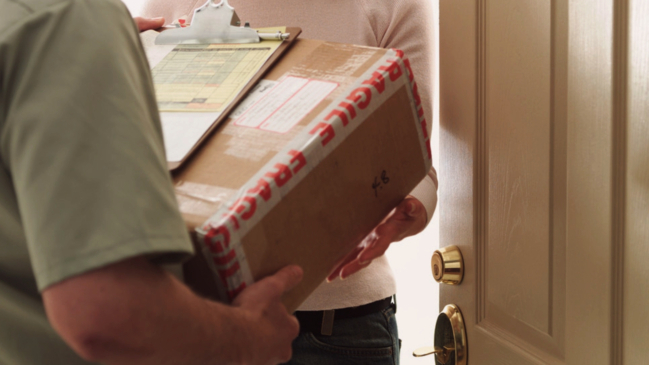
When it costs 16 euros to ship and return a pair of 28-euro jeans, and returning items back to stock can take 10 weeks, retailers have a problem. Yet customers today expect 'free returns' and options like 'buy online and return in store'.
Knowing that 44 per cent of customers order with the intention of returning at least part of the order and 58 per cent are less likely to buy from a particular retailer if returning items is a complicated process**, there is no doubt that efficient returns management has become a crucial part of the retail business model. Addressing this challenge needs to be higher on the agenda. With the objectives of getting returned items available for sale again quickly r and minimising the cost of the returns process.
When stocks and cash are tied up
How much longer can retailers afford to use free returns as a decoy? Especially when only a few of themcan accurately measure thereal cost of returns management throughout the company. Even though there is clear evidence that the option to buy online and return in-store generates more traffic and additional sales, few retailers manage this returns process to the point where they can accurately analyse the total cost of sales.
The problem is that, normally, the number of returns in a shop is relatively low. In contrast, in an omni-channel model that offers 'buy anywhere, return anywhere', in-store returns increase exponentially and the impact on the bottom line is significant. It is estimated that returns cost UK retailers £70 billion (around €80 billion) a year*.In doing so, some retailers report that 10 per cent of stock is unavailable for sale during the returns process. So there is a considerable amount of working capitaltied up in stock that is unavailable for sale.
Entering a product in the POS system after it has been returned by a customer is not enough to make it available for sale again. How long does this item lie in a basket behind the counter or in the shop warehouse before it is placed back on the shelves? And what about products that are not part of the shop assortment? How long does it take for these to get back to the distribution centre? How much does this cost and is it worth it? Or is it much smarter to mark the item down and put it with the bargains in the shop?
More visibility
ZUnder an automated inventory system, which is geared in real time toüpdatet for one overview throughout the organisation, a retailer cannot improve its returns management process. But that is just the beginning. This real-time overview must be combined with intelligent processes that collect all data on the returned item and enable staff to manage it and give it the right new destination. This way, stock availability is optimised with the least possible cost.
If an item is not in the assortment of the shop where it is returned, the system should automatically instruct an employee to mark it down, put it with the bargains , or return it packed to the distribution centre.That decision depends on several factors. Such as the original retail value, the cost ofreturning it to the distribution centre and variable factors such as the overall consumer demand for this item. All return items should be automatically re-routed and quickly returned to stock for the appropriate sales channel , instead of being unavailable for sale.
Hhe retailer's IT system must provide insight into the entire returns process, not only to know how all returnsare processed, but also to determine the right strategy. For example, to discover whether certainproducts are returned more often than others. That insight is valuable for future purchasing decisions, or a reason for recalling products in case of quality problems. All systems should be able to make use of an existing POS system. Furthermore, retailers should realise that flipping a returns process does not automatically mean reorganising the entire IT system.
Making returned items available for sale again
A generous returns policy can be beneficial for retailers may be essential to bring in more orders, but that process must alsobe efficient for cost implications. Today, the quality of the returns process directly influences customers' decision to stay with a brand. Returns management based on real-time insight into all processes has therefore become a crucial part of the retail formula.
To secure both profitability and customer experience, it is essential to implement systems that ensure the maximum value of return items. When re-selling them in-store, or bringing them back into the supply chain through sound return logistics processes. With sales on the rise again thanks to a growing economy, it is retailers who recognise the need for better management of their returns processes that will reap the benefits along with their customers every year. While competitors, meanwhile, are panicking.
More information? Zetes is an exhibitor at ICT & Logistics, visit their stand (03.B054), register here.











