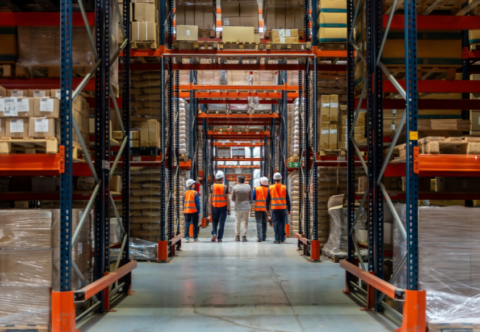
Companies are eager for good forklift drivers. To attract drivers, companies are paying more attention to the working climate. What more can we do to attract and retain good forklift drivers? Five tips from Tom van Blom.
Last year, a staggering three million square metres of new warehouse space was commissioned in the Netherlands. That is almost a doubling compared to 2016. Real estate broker Jones Lang LaSalle expects that trend to continue this year. Based on plans that are known, more than 2.3 million square metres of warehouse space will be added this year.
All these new locations need forklift drivers. Finding those drivers is proving to be a difficult task. Trade associations have been warning for some time about a shortage of truck drivers, but forklift drivers are in short supply. Some warehouses are experimenting with robots and unmanned forklift trucks, but for now, the demand for forklift drivers is growing much faster than the supply of robots.
More focus on work climate
Companies looking to build a new warehouse are increasingly choosing the location based on staff availability. For example, Inditex, parent company of Zara, chose Lelystad over Limburg to build a new mega-warehouse. Logistics hotspots like Brabant and northern Limburg are usually preferred for such mega warehouses, but Inditex doubts whether enough people can still be found in those regions. In Lelystad, 400 logistics employees will soon be needed.
New warehouses are also paying more and more attention to the working climate. Extra-large windows or skylights are installed in the rooms. In places where no daylight enters, LED lighting is installed to approximate daylight as much as possible. For coffee and lunch breaks, spacious canteens are equipped with an extensive terrace so that employees can easily go outside.
5 tips to retain forklift drivers
There are more ways for employers to win the battle in the logistics labour market. Here's how to make sure as an employer that you are and remain attractive to forklift drivers.
1.Invest in good equipment
Good forklift drivers like to ride on good equipment. Good doesn't just mean a machine with a strong engine and lifting mechanism that produce few breakdowns, but also one that is user-friendly. Involve forklift drivers when choosing new equipment. When buying machines, pay attention to getting on and off, seating comfort, all-round visibility and machine operation.
2.Create a safe working environment
Forklift drivers would like to go home without colour tears. Research by BLOM Training previously showed that forklift drivers are annoyed by pedestrians who turn up at unexpected moments. Ensure a safe working environment and prevent accidents by drawing up a good traffic plan and clearly marking lanes and walkways.
3.Provide a pleasant working atmosphere
People, including forklift truck drivers, like to work in an environment where their professionalism and skill is noticed and appreciated. Make use of their knowledge and experience and listen to their comments. Involve them in improving processes and create a company culture where they can call each other to account for undesirable behaviour. Also important: don't immediately punish every small mistake.
4.Invest in training and education
An employee who is given the space to continue developing at your company tends to stick around longer. Send forklift drivers to training or education that will actually help improve their driving skills and other competences. And look at new, digital solutions to maintain those competences even after that short course. Training and education institutes are happy to think along those lines.
5.Provide a pleasant working climate
It has already been said: in new warehouses, a lot is invested in a good working climate. Provide good light, daylight if possible, and pleasant climate control. Create an area where employees can relax with each other during breaks. A relaxed and enthusiastic driver who feels at home within the company is more productive and makes fewer mistakes.