What impact does 'Ordered before 23:59, delivered next day' have on working conditions in distribution centres? Volkskrant journalist Jeroen van Bergeij took the test and went undercover in bol.com's distribution centre for five weeks. Overwork, back pain and dozens of kilometres a day turned out to be no exception.
Van Bergeij starts his logistics career through Tempo Team. The journalist actually works for Ingram Micro, the logistics provider bol.com provides.
Opportunistic return behaviour
He spends the first weeks in the returns department, where Van Bergeij is particularly surprised by the used products, which are shamelessly returned. Dildos with poo attached, hoovers with stuffed bags and cat baskets where fleas are jumping out. "When you stand at returns, you soon find out that consumers are trying to lift the online shop on all sides. A common trick, I hear from several colleagues, is, if your computer monitor has broken, to order another one and return the old one in the new packaging."
Changing rosters
Besides criticising the consumer's opportinistic behaviour, Van Bergeij does notspare the online retailer in his article either. These include the highly irregular working hours. As a temporary worker, you are told at the last minute when you have to work. Sometimes that's the whole week, sometimes it's just two days. Almost always, the schedule changes during the week. Leave days granted can be revoked a day in advance, writes the journalist.
No American conditions
Van Bergeij complains about a lack of daylight in this department, but also talks about the good atmosphere. "There are no 'American conditions' like in Amazon' s warehouses where you can't even go to the toilet properly or collect penalty points. The team leaders are understanding."
Daily twenty-kilometre walk
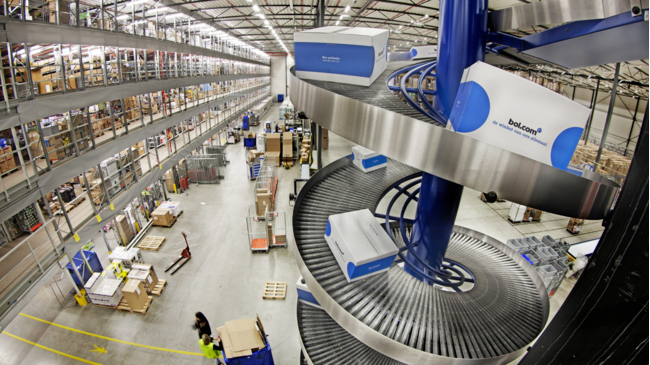
Things are different in the Picking department, where Van Bergeij comes to work after a few weeks. The pedometer the journalist smuggles in shows that he covers 20 kilometres in the distribution centre every day. "It is mainly the young Eastern Europeans who set the pace: more that of a fast walker than someone running the evening four-day walk."
Every day, lists are hung up with the previous day's personal scores: how many products you 'picked', what kind of products, and the ratio. Per minute, you have to pick about three items. For Van Bergeij, it remains unclear what happens if that standard is not met.
Temporary employment agency lets staff go after eighteen months
However, it is clear that staff turnover is huge. Hardly anyone works in bol.com's distribution centre for more than a year. This is partly because temp agencies have to offer people a contract after a year and a half. "Several people told me that through the temp agency they were no longer allowed to work for Ingram Micro after a year and a half. They then didn't work for six months, or went to work elsewhere and were then rehired at bol.com's distribution centre."
Complaints about back pain
Little attention is paid to ergonomics in the Picking department. For example, pickers have to lift 26-kilo bags of dog food. When the journalist complains to his team leader about back pain, shoulders are shrugged. "Yeah? And?", reads the Polish team leader's response.
Reaction bol.com and Ingram Micro
The Volkskrant asked both bol.com and Ingram Micro for a response. The parties acknowledge some of the situations outlined in the article. Jos Goedhart, director of Business Resources at Ingram Micro, says: "There is indeed the necessary dissatisfaction about this and we are trying to improve it. Working in the high season requires a lot of flexibility. The buying behaviour of consumers is erratic and we have to adapt to that, because the promise is: ordered today same or next day at home. The Dutch temporary worker has a social life, the sports club, fixed evenings for the children. Eastern and Southern European temporary workers do not care whether they have to work Thursday or Friday evening. Or whether they are home at ten or twelve o'clock. There is more flexibility there."
Ingram Micro also acknowledges using public lists of scores. However, there is no question of increasing work pressure, Goedhart said. "Based on ratios, we check whether people are in the right place. If you don't get your ratio, then we engage in conversation. People also like to know their score themselves. The higher your score, the more hours you can make. We don't schedule people based on their ratio, but if overtime is needed, team leaders will naturally ask people with higher ratios to stay longer."
According to Ingram Micro, order pickers walk under 20 kilometres a day. On how the journalist's back pain was handled, Goedhart states. "That's not good. That's not how we want it to be."