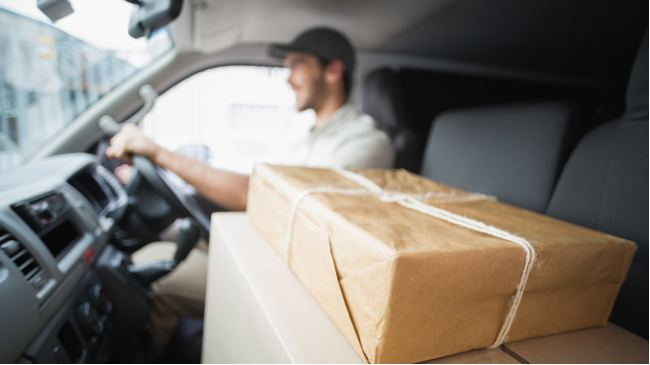
Earlier this year, Veilig Verkeer Nederland warned about the danger of couriers in residential areas. VVN's research found that these couriers often drive too fast and inattentively. The increase in the number of couriers in streets is directly linked to the growth of e-commerce. VVN therefore argues that online shopping threatens traffic safety in neighbourhoods.
Veilig Verkeer Nederland calls on citizens to take action against the increase in couriers. But what can we do to prevent couriers from flooding neighbourhoods, while continuing to enjoy the benefits of online shopping? Three options are discussed below.
Tightening rules on speed
One way to get vans to reduce their speed is to lower the maximum speed limit. On the one hand, this requires clear communication with traffic signs. Research shows that, in addition, deploying Dick Bruna signs has a reinforcing effect and leads to 20% fewer accidents. In addition, physical measures such as speed humps are important to make speeding more difficult. Moreover, additional enforcement is necessary. The disadvantage of this approach is that it costs the municipality money and effort.
Pick up your ownparcels at a Pick up Point
Residents of these neighbourhoods can also pick up their own ordered parcels at a Pick up Point. This is particularly effective if the pick-up locations are chosen in such a way that residents do not drive separately for it themselves. Think of a supermarket, where it is possible to pick up orders from online shops. As a result, couriers only have to pass by the shopping centre. This also has advantages for residents. For instance, after doing their shopping, residents can immediately take home their package ordered online. If there are many and easily accessible pick-up points, this could help solve the problem with couriers in the neighbourhoods. However, Dutch consumers still have a clear preference for home delivery.
Letting packages hitch a ride on traffic already on the road
Another solution is to use cargo-sharing. This allows neighbours to drive past a distribution point after work to take their neighbours' online orders. This ensures that there are no more couriers racing through the streets, but that neighbourhood residents take charge themselves. These people would drive into the neighbourhood anyway and let the orders tag along. Thus, this effectively reduces up to 25 per cent of the kilometres in the neighbourhood needed to deliver a parcel. And you can expect quiet driving behaviour from the conscious neighbourhood people who do this. So the online shopper gets his order delivered to his home, while the neighbourhood remains safe.
What role do you think safety will play in discussions about home delivery of online orders?
Jan Wijn - CEO Trunkrs











