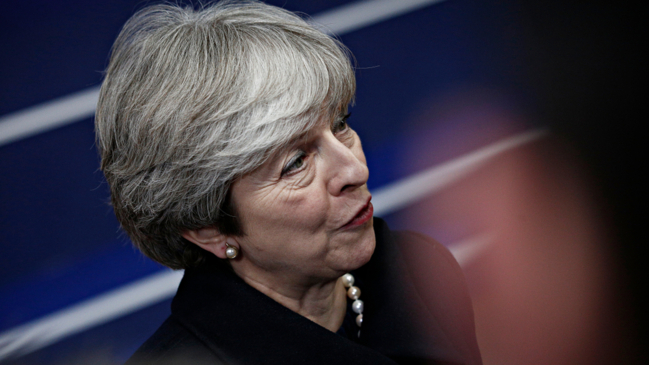
A majority of the UK House of Commons voted against Theresa May's Brexit deal on Tuesday. With 16 days to go until the Brexit, a no deal seems increasingly likely. Tonight, members of the House of Commons will vote: do they want a new deal or will they go for exit with no deal?
The British press writes that Prime Minister May is now close to despair. Her amended Brexit proposal was voted down by 391 members yesterday. Only 242 members voted in favour.
Vote for no deal or postponement
A new vote follows on Wednesday night, with members of the House of Commons deciding at 8pm whether they want a deal at all, or whether they want to leave the EU with no deal. A vote on a possible postponement of Britain's exit, currently scheduled for 29 March, will then follow on Thursday. According to May, parliamentarians will also have to decide on Thursday whether to hold a second Brexit referendum.
Majority against no deal
Members of the UK House of Commons appear to be against a hard Brexit. On 26 February, an overwhelming majority already voted against a no deal, with opposition leader Jeremy Corbyn stating on Tuesday that leaving the EU without a deal should be avoided at all costs.
This seems favourable for the transport and logistics sector. Earlier this year, ABN Amro published a report detailing the consequences for Dutch business in the event of a no deal. The bank argued that
Postponing Brexit
A postponement of the date seems likely, provided the European Union agrees. European leaders seem to see little point in postponing if the UK does not come up with a clear plan.

Guy Verhofstad, Brexit coordinator for the European Parliament, sees little point in an extension:

Consequences for transport and logistics
In any case, the transport and logistics sector would not benefit from a no deal, ABN Amro said in a report at the end of January. The bank argued that companies in transport and logistics would be most vulnerable in the event of a hard Brexit. Transport companies, which now only need two or three documents for exports to the UK, would face a lot of red tape
Moreover, border controls introduced in the event of a no deal will create additional waiting times. An average ferry has 5.5 kilometres of trucks, 300 passenger cars and 1,200 passengers. The queues that may be created are a major risk for transporters of perishable goods and for just-in-time deliveries.











