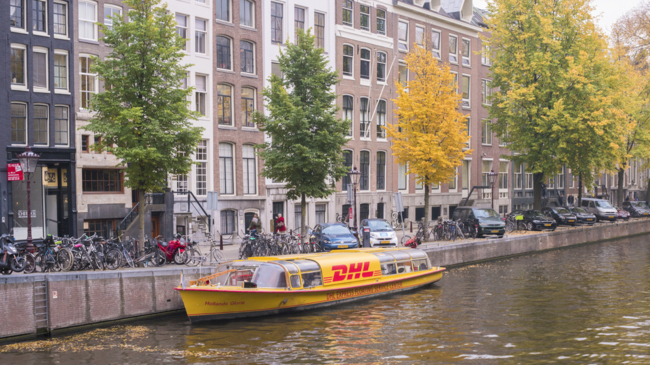
The exponential growth of e-commerce is growing the need for ´last mile delivery´ in major European cities. This will lead to a huge increase in demand for urban logistics real estate in the coming years. "Both distributors and e-commerce companies need locations no more than half an hour's drive from a city centre."
Parcel distribution up 69 per cent
So says international real estate consultant Cushman & Wakefield in its Urban Logistics research report. Cushman & Wakefield quantifies the need for urban logistics real estate based on current and future online sales volumes. The model shows that parcel distribution in Europe's top e-commerce markets will increase by 69 per cent until 2021, with a doubling in the Dutch market. "Urban logistics real estate is a new niche within logistics real estate that is emerging from the huge increase in parcel delivery," states Menno van Boxtel, Head of Logistics Cushman & Wakefield.
Gap between demand and current supply
According to Van Boxtel, there is a gap between the current real estate supply and the imminent demand. "Both distributors and e-commerce companies need locations no more than half an hour's drive from a city centre to meet the expectations of online consumers for whom speed and delivery reliability are crucial. However, property specifications must be fully tailored to the type of user such as an express or parcel service, a food or non-food retailer or a logistics service provider, for example."
Adapting existing real estate
The market's biggest challenge is to create spots of around 2,500 to 5,000 square metres near city centres. "Those spots are scarce now but can be created by adapting existing properties, redevelopments or relocating current users, for example," says Jan Verhaeg, Head of Industrial Cushman & Wakefield. Verhaeg says this applies to all larger cities in the Netherlands, as long as the location is easily accessible, offers good access to the labour market and can be adapted to the type of user.
Highest demand in London and Germany
Expressed in purchasing power and population figures, London is Europe's largest and most mature e-commerce market. The current demand of 870,00m square metres is expected to increase by 42 per cent to 1.2 million square metres by 2021. Germany is the second most important e-commerce market in Europe mainly due to its many large cities and the flight of online shopping in this country compared to the rest of Europe. Demand for urban logistics real estate in Germany is expected to increase by 77 per cent by 2021.

Strong growth in online shopping will also drive demand in less mature e-commerce markets. In Spain, these are especially in Barcelona and Madrid, where demand is expected to more than double by 2021. A relatively small market like Warsaw, is expected to grow by 90 per cent from just 43,000 square metres now to around 82,000 square metres in 2021.











