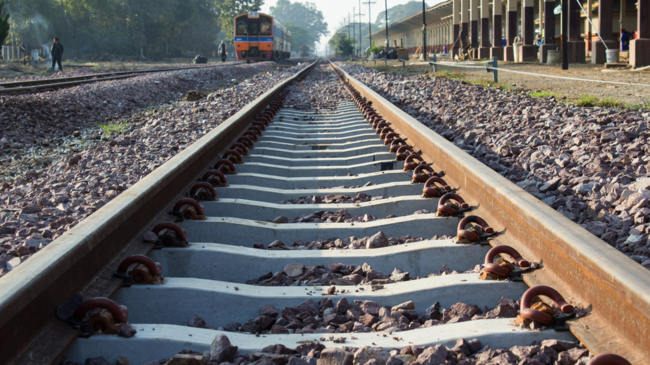
In an increasing number of regions, shippers are taking the initiative to bundle goods flows and use other modes of transport. From Brabant and Zeeland, connections by rail and inland waterway have been set up with Hungary, while in October a first train carrying refrigerated products will depart from Rotterdam to Valencia. The Top Sector Logistics will support these regional initiatives and has endorsed this in agreements with the Brabant and Zeeland regions.
Many shippers would like to use transport modes that are more sustainable than road transport, but lack the volume to run a train or boat often enough. Another obstacle is the lack of a return flow. Through cooperation, several shippers still manage to establish synchromodal connections.
One example is the rail link that Samsung and Sabic have established towards Slovakia and Hungary as part of the NewWays project. Sabic has factories here that supply those countries, while Samsung has a factory there with products for its distribution centre in Brabant. The train link provides Samsung with cost savings of 8 per cent on transport towards Slovakia and 1 per cent on transport towards Hungary. "In addition, there are many benefits that are less clearly measurable. For example, we now have more control over when which container unloads at our DC. This also allows us to better control the operation inside the DC," Robert van der Waal, director of logistics operations at Samsung, says.
70 per cent CO2 reduction
In Zeeland, Yara and Cargill have bundled their goods flows on the inland waterway route to Hungary. Yara produces fertiliser in Sluiskil, while Cargill gets sunflower seeds from Hungary. Yara's flows from Finland also no longer go directly to Hungary, but via shortsea to Sluiskil and from there on the barge towards Central Europe. "We are now looking into adding other shippers," says Erwin Salemink of Zeeland Connect, the organisation that mediates between Zeeland shippers.
The train connection with Valencia is an initiative of the Port of Rotterdam Authority, Euro Pool System and Bakker Barendrecht. The aim is to ship fresh products such as flowers and plants towards Spain and fruit and vegetables to the Netherlands via Cool Rail Spain. The first train will start running at the end of October when the citrus harvest experiences its peak season. "In theory, cost savings could be up to 30 per cent," says Fred Lessing of Euro Pool System. "We thought that a 50 per cent reduction in CO2 emissions was possible, but now we know that including pre- and on-carriage, even 70 per cent is feasible," adds Anne Saris of Bakker Barendrecht.
In the region
What the three initiatives have in common is that they originated in the region. This is no coincidence, says Frans van den Boomen, who has been appointed ambassador for synchromodal transport. "Between shippers who want to cooperate, cohesion and trust must first be established. This happens best between shippers in the region. In projects like this, it is the people who make the difference. They must then be able to find each other easily."
The Top Sector Logistics supports the regional initiatives, wants to provide the necessary facilities for this and helps to connect regional projects with similar projects in other regions as well. In addition to Frans van den Boomen as ambassador, Jeroen Bolt has been appointed as programme manager of Lean & Green Synchromodal for this purpose. During the conference, NewWays and Zeeland Connect together with Lean & Green Synchromodal signed cooperation agreements that should give synchromodal transport a further boost. Other regions should follow in the near future. Gelderland, South Holland and Amsterdam have already expressed interest.
Marcel te Lindert - logistics and supply chain journalist











