Goods arrivals and departures in Dutch seaports fell by 8.2 per cent to nearly 558 million tonnes in 2020. This is the biggest drop since the 2009 economic crisis.
That is according to new figures from CBS. Transhipment of unloaded goods - 65.5 per cent of total transhipment - was 11.2 per cent lower last year than in 2019. Exports of goods by sea to foreign countries fell by weight by 1.9 per cent. For landings, the decrease in dry bulk goods was the largest at 19.9 per cent. In particular, less coal (-34.7 per cent) and ores (-22.1 per cent) were landed, caused by sharply lower steel production in Germany.

The decline in wet bulk landings is due to the decline in oil products and crude oil. Of these, 14.7 and 8.4 per cent less was landed by weight than a year earlier. This was partly due to a decline in transhipment of fuel oil, gas oil and diesel. Less flying and less passenger transport during the corona crisis played a role in this.
Container weight up, numbers down
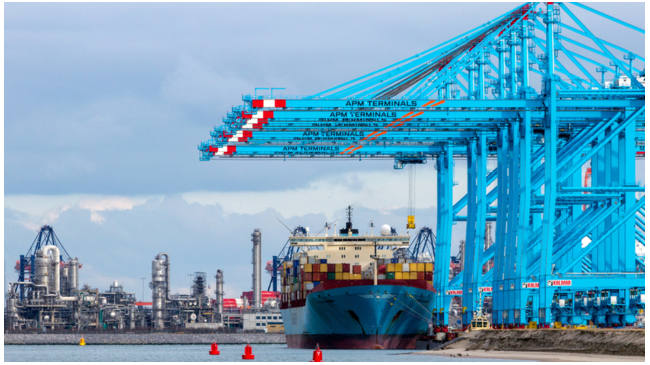
While bulk goods recorded a sharp drop in throughput, container throughput increased. In 2020, total arrivals and departures of goods in containers amounted to 134 million tonnes, 0.4 per cent more than in 2019. Exports of goods in containers increased by 1.5 per cent, while arrivals fell slightly.
Almost 98 per cent of containers in the Netherlands are unloaded and loaded at the port of Rotterdam. This number is often expressed in TEU, the standard size for a container. Rotterdam is Europe's largest container port with over 14.3 million TEU, followed by Antwerp and Hamburg with 12.0 and 8.5 million TEU respectively . The number of containers in Rotterdam fell 3.1 per cent in 2020 compared to a year earlier. At the port of Hamburg, it fell even more sharply at 7.9 per cent, while Antwerp recorded a small plus (1.4 per cent).











