Even if the second corona wave continues for a long time there will be no shortage of medical devices such as mouth masks and gloves, confirms Alex van der Putten, responsible for Logistics & Distribution of the National Consortium of Medical Devices (LCH).There is enough stock in the LCH's warehouses to last for quite some time.
When COVID-19 broke out in the Netherlands in March, demand for personal protective equipment such as mouth masks, gloves and protective clothing rose rapidly. Meanwhile, logistics chains were heavily disrupted and people were competing with each other for limited supplies. "If you normally needed a few hundred FFP masks per week in the hospital, suddenly there were almost ten thousand. No supply chain is built to scale up so quickly," Alex van der Putten explained at a GS1 digital meeting.
Robust and flexible logistics network
Getting hospitals, the market and the government (the health ministry) to work together on procurement should improve the distribution of supplies. On 20 March, the LCH took shape. Van der Putten: "VWS gave us two orders: make sure you buy devices and make sure they come this way - all the way to the hospital or other care institution. On 28 March, we started delivering."
The items came mainly from China and Malaysia. A logistical challenge, as supply by plane or ship was largely flat. In a few days, Van der Putten and his colleagues set up a "robust and flexible" logistics network. "Resilient and on top of existing systems, both with air traffic, the pick-up locations and transport to the care providers."
A consent table was developed in consultation with umbrella organisations and other stakeholders, for resource allocation based on four scarcity levels. Less than 72 hours of supply was referred to as 'level red'. "We also looked at what the logical consumption would be based on staff size, among other things. All with the aim of distributing scarce resources as best as possible." Based on supply and demand, a distribution was eventually made. Van der Putten: "Particularly in the beginning, the dependence on the LCH was high, later again leaning more on its own suppliers."
45 million mouth masks in stock
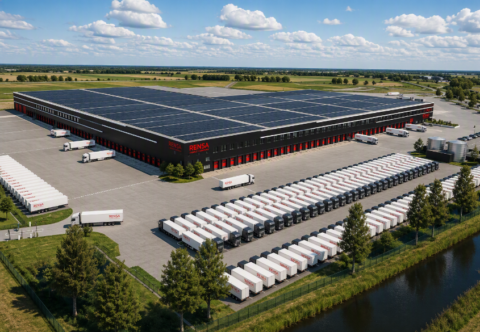
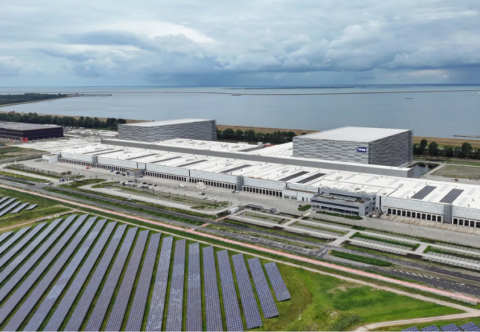
Via a dedicated airlift with KLM, more than 280 flights have been made to pick up supplies since March. In the Netherlands, everything was brought to the DC in Vianen and distributed immediately. "At one point, we got a buffer stock and could also bring in supplies via slower transport - mainly ships. In total, we received 3,000 containers." Until mid-September, over 140 million protective equipment had been delivered to 5,200 healthcare facilities, from UMC to GPs.
According to Van der Putten, there is enough to last for quite some time, even with demand rising again. There is still a lot on the way and efforts are being made to increase production in the Netherlands to reduce dependence on foreign countries. "For instance, we now have a billion surgical mouth masks in stock at the LCH, 700 million gloves, more than 45 million FFP mouth masks etc. So there is plenty of time to scale up. For now, we suggest: order from your own supplier first and only if that fails, from the LCH. We must remain an emergency line. The Netherlands should not become dependent on us."