Thuiswinkel.org backs the ACM's position that the Netherlands needs more service points and parcel lockers. The industry association does mention a number of preconditions needed to make delivery points a success.
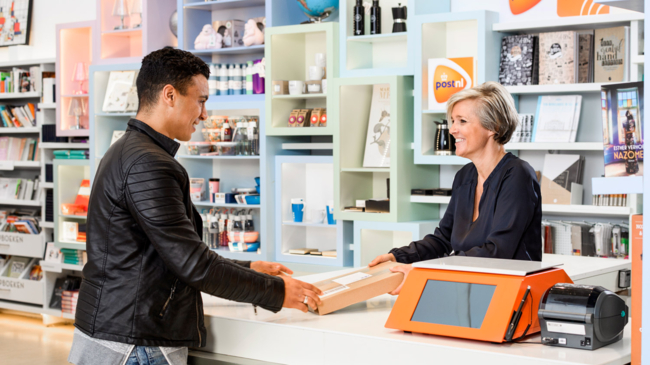
Last week, the Consumer & Market Authority (ACM) calculated that the number of households with a delivery point (service point or parcel locker) within walking distance is between 16 and 52 per cent, depending on the carrier. The market watchdog thinks expansion of the number of delivery points is desirable. Thuiswinkel.org broadly agrees with this view, but makes a number of comments and preconditions.
"First of all, it is good to know that the last mile is already taken care of very efficiently in the Netherlands," says Margreeth Pape, sustainability and logistics programme manager at Thuiswinkel.org. "The image exists that there is the e-commerce industry delivering parcels in the city centres on a daily basis with many vans, but research shows that only 3 to 5 per cent of these vans actually deliver online orders."
Location is key
The industry association acknowledges that service points make parcel delivery more sustainable and efficient. "What is most important in terms of service points, however, is that they are placed in good locations where consumers are anyway, for example near their homes or work," Pape argues. "If not, they still often take the car to pick up their parcel and then you have actually lost your sustainability advantage."
Don't focus on van emissions
At the end of June, Thuiswinkel.org, Connekt, TNO and HvA published a study on the CO2 impact of service points compared to other delivery methods, such as home delivery, and how it can be kept as low as possible. "This study also included consumer behaviour, as we see that currently they still regularly use the car when picking up orders," the programme manager said. "For the additional service points to be a success for both the environment and consumers, we need to look not only at the reduced CO2 emissions from delivery vans, but also at how easy it is for consumers to pick up their orders on foot or by bike. Sustainability and convenience are therefore the essential terms here, which cannot be separated."