Transport and logistics sector growth slows from 1.5 per cent to 0.5 per cent this year. It is not only the flattening growth of the Dutch economy that has an effect; environmental regulations around nitrogen and PFAS are also putting a spanner in the works.
This is what ABN Amro predicts in its latest sector forecast. In 2019, the sector grew by 1.5 per cent. Lower growth of 0.5 per cent is expected for 2020. This is because growth in exports and imports is falling, as is growth in a number of sectors important to the transport sector, such as construction, agriculture and manufacturing. Growth in retail, a sector that is particularly important for road transport, warehousing and other logistics services, is holding up reasonably well thanks to rising purchasing power.
ABN Amro expected construction, with 2.5 per cent growth, to keep the transport sector on track nicely. However, due to policies around nitrogen and PFAS, a 2 per cent contraction is expected for that sector, affecting the transport and logistics sector.
Slap for inland shipping
Dry cargo vessels in inland shipping in particular carry a lot of cargo for construction. Raw materials and building materials account for about 40 per cent of the cargo volume in inland navigation. Road transport is also suffering from declining demand. The bank's research shows that entrepreneurs in construction, transport and industry expect billions in losses by 2020 due to policies around nitrogen and PFAS. Declining demand for transport services could put pressure on rates and margins.
Fewer building permits DCs
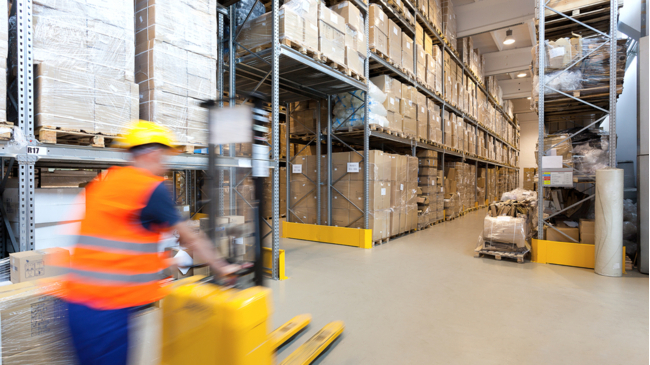
Due to the nitrogen issue, fewer building permits may be issued for distribution centres, for example. This is because distribution centres indirectly cause additional nitrogen emissions in the immediate vicinity. After all, the establishment of a distribution centre generates more traffic. Moreover, the mitigating measures taken by the government to revive business activity are mainly focused on residential construction and infrastructure. Non-residential construction, which includes the construction of distribution centres, is likely to be the biggest victim of the nitrogen crisis. Construction orders for halls and warehouses have fallen considerably since the State Council's nitrogen ruling at the end of May 2019. This is putting a brake on the growth of logistics companies.
Air freight takes a nosedive
Dutch air cargo volumes have set off a "staggering decline" in 2019, ABN Amro said. Volumes fell by 9 per cent. The plunge was partly due to the lost growth in global trade. Yet the sharp drop is mainly a problem of Schiphol. As Schiphol has grown fast, it has reached the maximum of 500,000 flight movements per year. This has created a shortage of flight movements, also known as slots. The slots not used by air cargo during the economic downturn have expired and have been allocated to popular holiday flights, among others. Air cargo will not get these slots back just like that. Schiphol's competitive position comes under pressure as trade flows are shifted, at the expense of connections to other airports. This could have a negative impact on air cargo companies and logistics service providers around Schiphol.
Sustainability creates distinctiveness
According to the bank, the transport sector needs to do more to become more sustainable: emissions of CO2, nitrogen oxides and particulates need to be reduced and this affects almost all segments. "There are two ways for the sector to reduce emissions: organising and planning transport movements more efficiently, or using more sustainable means of transport, powered by electricity, LNG or hydrogen. Electric trucks are so far mainly used for short-distance distribution and in inland shipping, electric ships are used for construction logistics, among other things," says Albert Jan Swart, Sector Economist Transport and Logistics at ABN AMRO. "In the short term, the biggest sustainability drive will be in cities, with electric delivery vans and delivery bikes. This will create more demand for sustainably executed transport. Companies that are at the forefront of this can benefit. Offering sustainable logistics services is a way to stand out in a market that is often fiercely price-competitive. It is not only in urban areas that emissions need to be reduced. Sustainability is also needed in shipping and aviation."











